
Audi closed on Haas in Mexico, but a collision between their drivers showed how quickly a points opportunity can unravel. Now Interlagos brings a different challenge—and little room for another costly mistake.
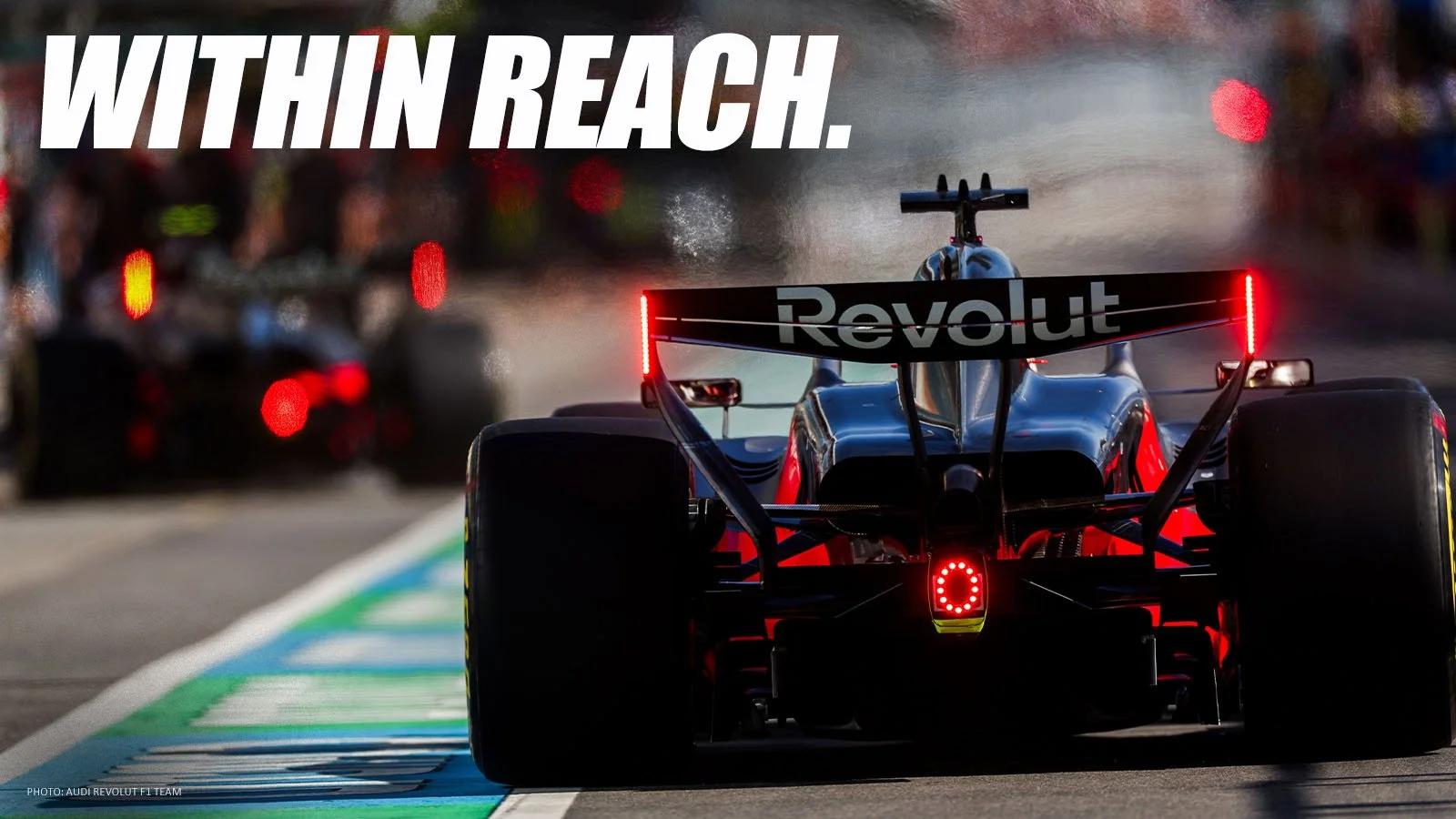
Four points separate Audi from Haas heading into the Brazilian Grand Prix. Their last encounter was considerably closer.
At the restart in Mexico, Nico Hülkenberg hit the rear of Oliver Bearman’s Haas at Turn 4. Bearman retired. Hülkenberg received a 10-second penalty and finished outside the points. Two drivers fighting in the same part of the field had lost opportunities their teams could use.
Audi still left Mexico closer to seventh place. Gabriel Bortoleto’s eventual eighth-place finish brought four points, while Haas collected one through Ryo Hirakawa. The gap narrowed to 31–27.
That gives Audi a clear target at Interlagos. Mexico also supplied a reminder of what can get in the way.
Hülkenberg had been competing for points before the red flag interrupted his race. Afterward, he described temperature problems that had made it difficult to attack, then acknowledged his mistake at the second start. Following Bearman too closely had cost him front downforce, and he couldn’t stop in time.
“Obviously not intentional, apologies to him and the Haas team,” he said in Audi’s post-race account.
The stewards found Hülkenberg solely responsible for the contact. His race cannot be explained by unfortunate red-flag timing alone.
Bortoleto’s weekend presented a different problem. Limited practice running left him short of preparation, yet he recovered to finish 11th on the road. Penalties for three drivers ahead subsequently promoted him to eighth.
Audi took the reward, but the distinction matters. Four points improved its championship position; they did not erase the difficulties that had left one driver underprepared and the other penalized.
In Brazil, preparation becomes particularly important because the circuit itself has changed.
Pirelli has selected C3, C4 and C5, a step softer than last year’s allocation. Sections between Turns 3 and 5 and Turns 8 and 9 have also been resurfaced. According to the tire supplier, those changes could affect grip and how the tires behave over longer runs.
For Audi, Friday’s work therefore has a direct bearing on Sunday’s chase. It needs to understand how long its tires remain competitive and how the R26 responds as the track develops. A quick qualifying lap will only answer part of that question.
Hülkenberg will have one fewer session to gather that information personally. Freddie Slater takes his car for FP1, following his outing in Bortoleto’s R26 in Mexico. Slater’s running and Bortoleto’s feedback will contribute to the team’s early assessment before Hülkenberg returns for second practice.
For Bortoleto, the weekend also carries the significance of returning to race in São Paulo. After salvaging points from a disrupted Mexico weekend, a full preparation program would give him a better foundation for his home race.
Audi racing director Allan McNish has identified execution across every session as the priority. This weekend gives that familiar racing phrase a specific meaning: complete the running, understand the tires, and keep both cars in contention when the opportunities arrive.
The Audi–Haas contest is worth watching beyond the final results sheet. If their cars meet again on Sunday, every position gained will come directly at a championship rival’s expense. Interlagos offers room to race. Audi needs to make those encounters count.
