
Verstappen says cold rain tires feel “really like a rock.” Hadjar questioned their grip through standing water. Even race winner Norris sees a potential problem ahead in Las Vegas. So why did Pirelli leave Brazil encouraged?
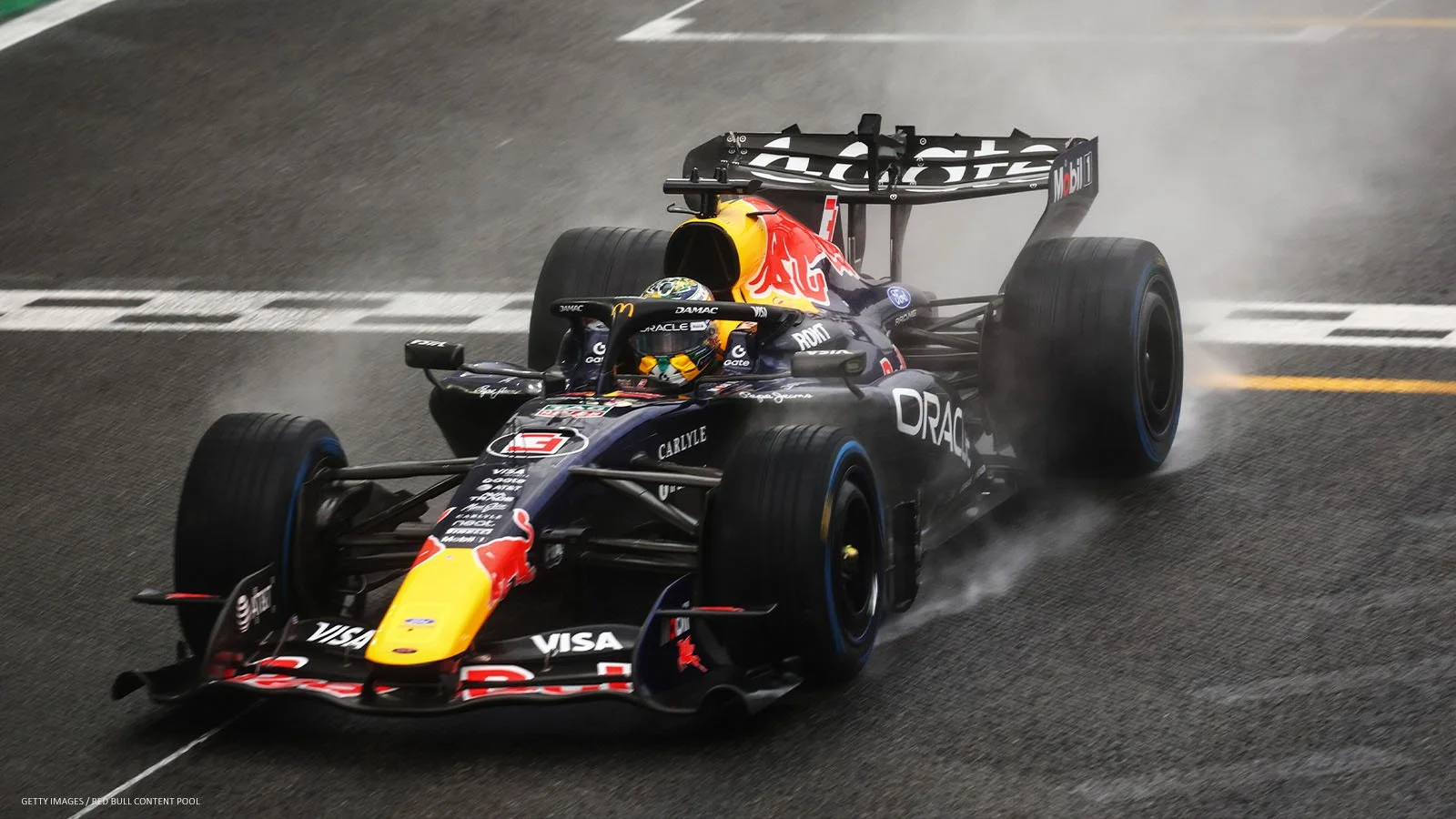
Interlagos delivered the kind of wet-weather spectacle fans remember. From the cockpit, it also exposed concerns that a great race couldn’t settle.
After finishing on the podium, Max Verstappen, Isack Hadjar and Lando Norris each identified limitations in F1’s wet-weather tires. Their assessments weren’t identical—and neither were the problems they described.
Grip shouldn’t disappear with the temperature
Verstappen’s concern covered both full wets and intermediates: they work when hot, but their useful temperature range is too narrow. He wants grip across a broader range, making them easier to bring into operation.
Hadjar focused on Saturday’s qualifying. He felt the full wets aquaplaned too readily for the amount of water present and described the opening three Q1 laps as “quite dangerous.”
Aquaplaning means water separates the tire from the road. That’s a different problem from cold rubber struggling for grip, even if both leave the driver fighting for control.
Norris offered an important qualification. The tires “performed reasonably well” in Brazil, he said, and he backed the FIA’s decisions. His warning concerned a potentially wet Las Vegas, where generating tire temperature could be harder.
That was a conditional concern, not a forecast of rain.
Why Pirelli saw progress
Pirelli’s assessment after qualifying emphasized something else: the full wets allowed running to resume, then remained effective as the track improved before drivers switched to intermediates.
Motorsport director Dario Marrafuschi credited development of that transition with making the changeover smoother.
His assessment preceded Sunday’s driver comments. It wasn’t a response dismissing their concerns.
The distinction matters. A tire can remain competitive as the track dries while still leaving drivers wanting more confidence when it’s cold or encounters standing water.
Brazil demonstrated that F1 could put its full wets to use. The question the drivers raised goes further: how much predictable grip is available before everything reaches the ideal temperature?
