
One Car, Two Continents: The People Connecting Cadillac’s F1 Team
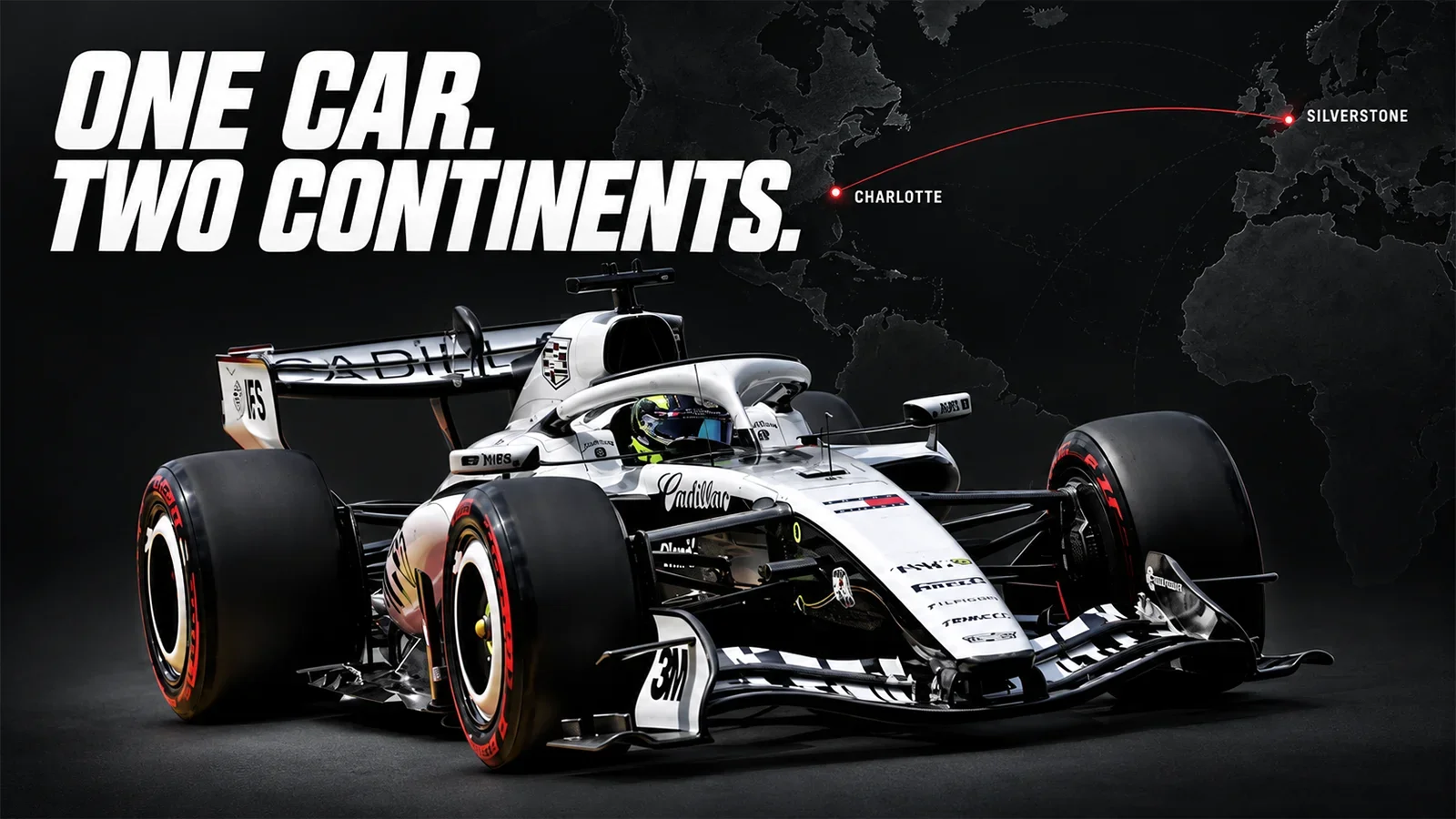
Cadillac’s car races at one circuit, but its engineering work reaches across the Atlantic. Behind that connection are people keeping data flowing, testing ideas in Charlotte and turning those ideas into parts.
Ryan Tincher’s contribution to Cadillac’s Formula 1 operation starts with making sure other people can do their jobs.
As IT Operations Manager at GM Motorsports, he helps support the information systems connecting the car, the garage and engineers working away from the circuit. GM’s latest What Makes Fast episode follows that connection between trackside personnel, Silverstone and Charlotte.
The responsibility is less visible than a pit stop, but Tincher recognizes its weight. Engineers need dependable access to the information they use to understand the car.
“It’s definitely a weight on our shoulders,” he says in GM’s accompanying feature.
That information also feeds the Driver In Loop simulator in Charlotte, where engineering work continues beyond the physical car’s running time.
Getting the information to the people who need it
Before engineers can analyze a measurement, someone has to make it possible to collect.
The episode shows custom wiring and instrumentation work, then follows a tire-temperature sensor’s connection through the Cadillac’s wiring harness to its electronic control unit.
It also distinguishes live telemetry from the more detailed information downloaded through a wired connection when the car returns to the garage. Sending data quickly and recording it at higher sampling rates serve different needs.
For the people maintaining those systems, the job is to keep useful information reaching the engineers who need it. For those engineers, the next task is interpretation: a measurement can show what happened without explaining why.
From Charlotte’s simulator to the race team
GM’s earlier reporting offers a concrete example of how that work reaches the track.
Ahead of the Miami Grand Prix, simulator support driver Aiden Price tested a suspension upgrade for Cadillac’s MAC-26 in Charlotte. His father, Greg Price, is a Design & Manufacturing Manager at GM Motorsports.
According to GM’s account, Matt Borland, Cadillac’s Director of Motorsport Competition Programs, contacted Greg after he had left the office and asked whether the parts could be built and delivered to Miami the following morning.
Greg helped arrange their manufacture and traveled with them to the team.
The example connects several distinct responsibilities: Aiden evaluating a change in simulation, engineers assessing the results, and Greg helping turn that work into physical components. GM reported confidence in the proposed improvement, rather than a measured lap-time gain from the upgrade.
Supporting the driver during a race
Simulator changes and adjustments to a moving race car are different activities.
FIA regulations prohibit team-to-car telemetry, subject to narrow exceptions for specified systems and communication handshaking. Engineers in Charlotte or Silverstone cannot remotely alter the car’s setup through that data connection.
During a race, analysis can inform strategy and radio instructions. Permitted cockpit adjustments are made by the driver; physical work requires the car to come into the pits and must comply with the applicable rules.
Cadillac’s transatlantic connection brings those separate jobs together. Tincher supports the information flow. Simulator drivers and engineers evaluate ideas. Manufacturing staff produce components. Trackside personnel and the drivers put the work into practice.
The car is the visible result. The people connecting those stages are part of how it gets there.
