
Hamilton wants serious talks. Leclerc has defended his decision. As Ferrari heads to Brazil, Vasseur’s challenge is turning two drivers capable of fighting at the front into a result the whole team can celebrate.
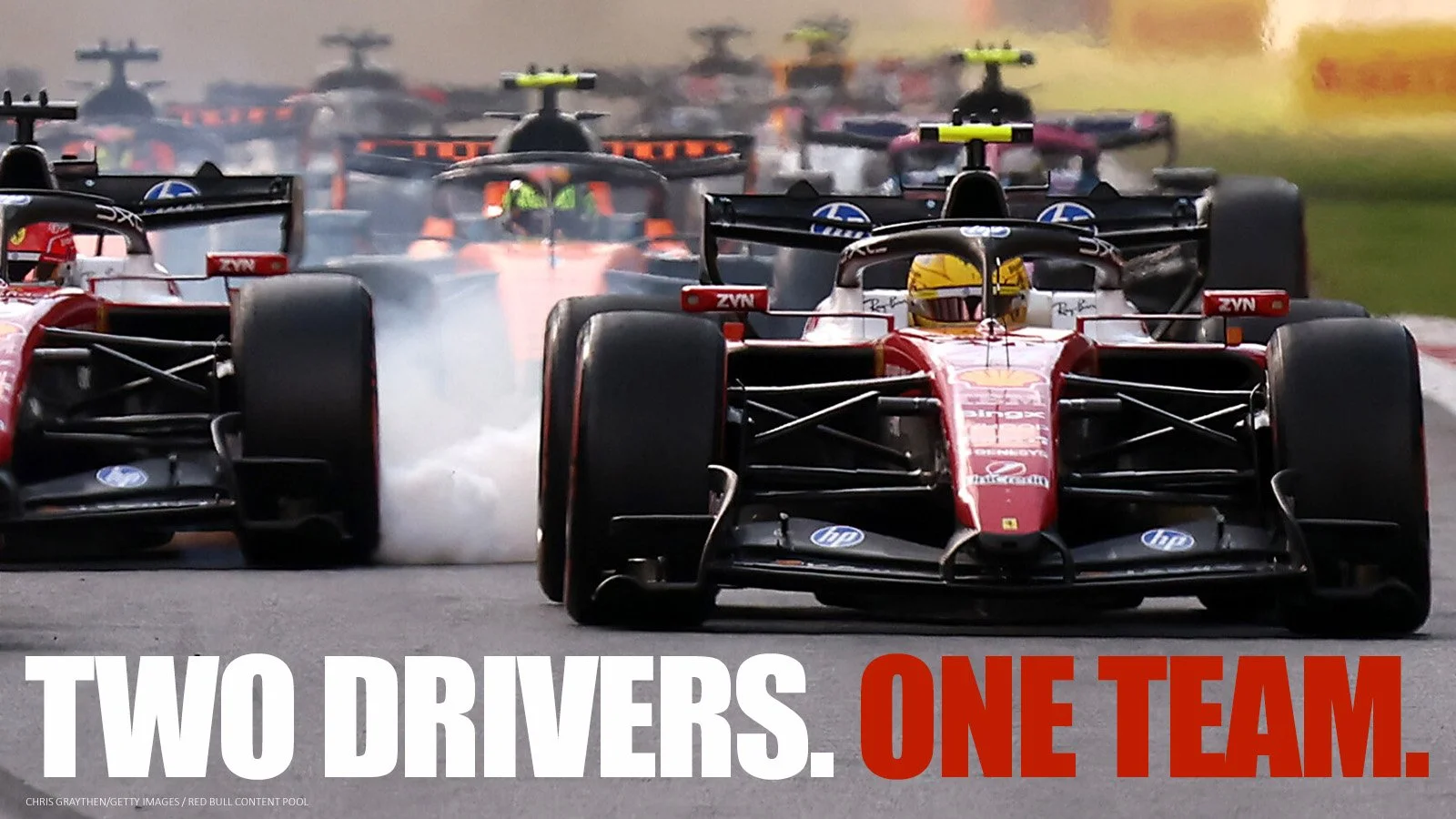
Ferrari had both cars ahead of Max Verstappen on the opening lap in Mexico. By the exit of Turn 4, the Red Bull was between them, Charles Leclerc had taken the lead off track, and Lewis Hamilton had lost the advantage he earned from pole.
The afternoon ended with Hamilton second and Leclerc fourth. Both Hamilton and team principal Fred Vasseur believed Ferrari had possessed the pace for a one-two.
That belief explains the frustration traveling with the team to Brazil. Ferrari had put itself in a strong position. Its drivers’ battle made that position harder to protect.
One corner, two different accounts
Hamilton and Leclerc raced side by side through the opening sequence before their fight reached Turn 4. Both ran wide. Leclerc crossed the grass and emerged ahead, while Hamilton lost momentum and Verstappen moved into second.
Leclerc received a five-second penalty for leaving the track and gaining an advantage. When he served it during his pit stop, Verstappen took the lead.
Hamilton later recovered second at the restart following the red flag, but the win remained with Red Bull.
“We have to have some serious talks behind the scenes for sure,” Hamilton said afterward.
He argued that Ferrari’s drivers needed to consider the consequences of their decisions for the wider team. In his assessment, the opening-lap battle had cost Ferrari a victory.
Leclerc accepted that a penalty was deserved, while explaining why he had kept the position. With Verstappen between the Ferraris, giving the place back to Hamilton would also have meant falling behind the Red Bull.
He said he had asked what to do and continued in the lead. He also pointed to Hamilton’s defense earlier in the lap, maintaining that hard racing was part of fighting for a win.
The disagreement therefore extended beyond the penalty itself. It concerned what each driver believed was reasonable while racing the other.
Vasseur’s message goes beyond the cockpit
Vasseur acknowledged that Mexico’s layout contributed to the difficulty, but rejected it as an excuse.
His concern was the collective effort behind the opportunity. Ferrari’s recent performance gains had required extensive work at the factory, and its drivers briefly occupied the two positions everyone had been working toward.
“It’s a matter of respect,” he said.
That message applied to the responsibilities both drivers carry. Vasseur emphasized the people working behind them and the need to keep the team’s interests in mind.
He also acknowledged the difficulty of making an immediate call from the pit wall. However, he said the drivers had agreed before the race that they should return a position themselves when required.
Brazil brings the next test
Vasseur’s frustration also contained an encouraging assessment: Ferrari had improved enough to compete at the front. Hamilton’s pole and the race pace in Mexico gave the team something tangible to build on.
After the race, Vasseur said Ferrari would discuss the incident internally before turning its attention to São Paulo. Those comments establish an intention to address it, rather than confirmation that new racing instructions have been agreed.
Interlagos now offers the next opportunity to use that performance. If Hamilton and Leclerc find themselves fighting near the front again, Ferrari’s response will be visible in the decisions made from the cockpit and the pit wall.
