
Cold air, long straights and streets reopened to traffic make Las Vegas an unusual test. Pirelli’s preview explains how those conditions could shape qualifying, tire choices and the timing of pit stops.
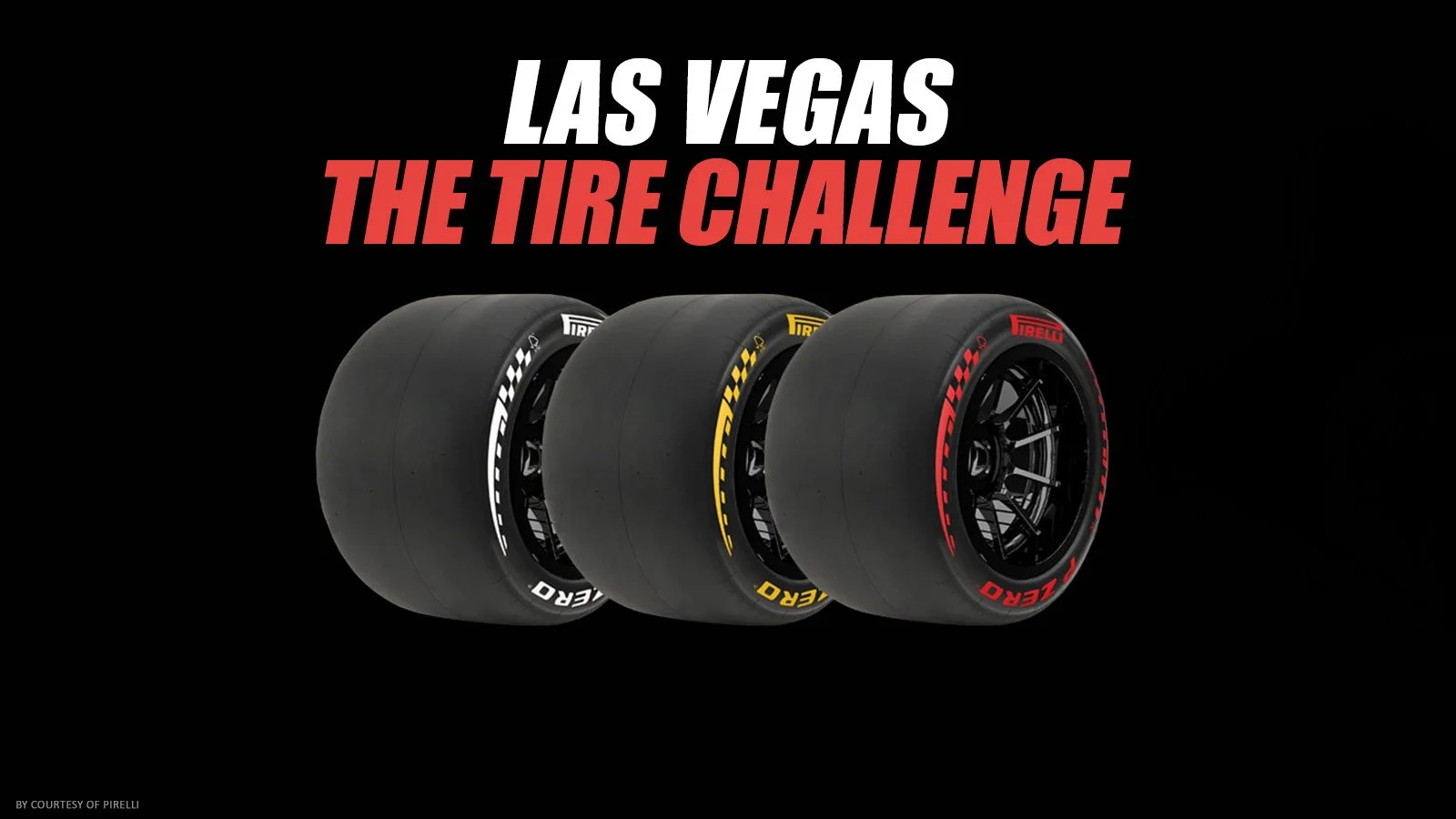
Fresh tires are only useful when a driver can make them work. In Las Vegas, reaching that point can be difficult.
Pirelli expects air temperatures of around 10–15°C for this year’s event. Combined with long straights and limited grip, those conditions make generating and retaining tire temperature a challenge throughout the weekend.
A track that changes between sessions
The circuit reopens to public traffic each day, allowing dust and sand to accumulate on the racing surface. That makes the usual progression toward a cleaner, grippier track harder to predict.
Low grip and cool temperatures can also encourage graining, where the tire’s surface develops small tears that reduce its effectiveness. Heavy braking at the end of the straights brings another risk: locking a wheel and creating a flat spot.
Managing tires here involves more than making a set last. Drivers need to protect them while building enough temperature to find grip.
Qualifying starts before the flying lap
Preparing the tires could be particularly important in qualifying. The long straights make it difficult to keep them within their ideal operating range, so Pirelli suggests teams may limit cooling laps between timed runs.
The same problem follows a pit stop. A fresh set may struggle to provide an immediate advantage, weakening the undercut, where a driver stops before a rival and tries to gain time before that rival pits.
Stopping first could still work. It simply offers less of the usual advantage if the new tires remain too cold.
Could all three compounds come into play?
Pirelli considers a one-stop race the likely fastest strategy, with the hard, medium and soft compounds all potentially usable.
Last year’s podium finishers started on mediums before switching to hards. Antonelli was the only driver to start on softs, replacing them on lap two.
Rain would bring another complication. Pirelli says the full wet’s deeper tread could help generate and retain temperature in these conditions, potentially making it effective if wet weather returns.
From the qualifying preparation lap to the first lap after a stop, tire temperature could determine how much of a car’s performance its driver can actually use.
