
Lando Norris couldn’t tell whether he was racing for the win or about to fall through the field. Max Verstappen knew where he could retake the lead. His worry was that on the final lap, the finish line would come first.
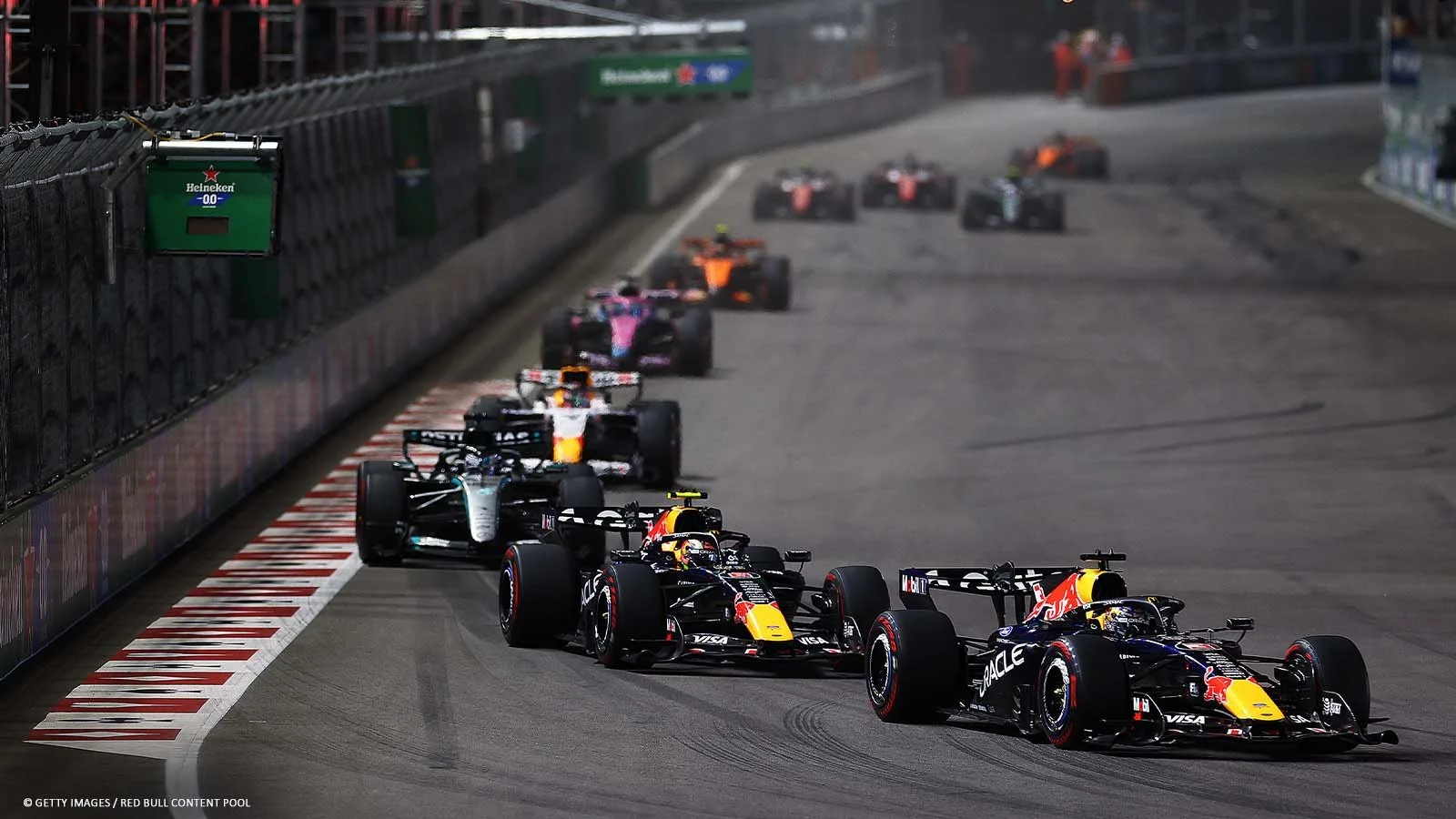
Lando Norris started third in Las Vegas, fell behind both Ferraris and both Alpines, then passed Max Verstappen for the lead. He finished second, 0.639 seconds short of winning. Somewhere in there, he thought he might end up last.
“I think that must have been the most chaotic race ever in the history of Formula One,” Norris said afterward.
Williams counted 352 position changes across the field. The lead changed hands 35 times in 50 laps. What made Vegas so hard to read from the cockpit was how little a pass settled. A driver could pull ahead on the Strip, cross the timing line first and arrive at Turn 1 with the car he’d just passed coming back at him.
When the car ahead was the other one from your garage
Pierre Gasly got ahead of Alpine teammate Franco Colapinto for sixth on the opening lap. Lewis Hamilton also passed Charles Leclerc early, but the Ferraris were still trying to settle their order on lap 38. Leclerc went for the inside, Hamilton spun, and Colapinto drove past both of them.
At the front, even the two Red Bulls struggled to stay in formation. Isack Hadjar had passed George Russell and drawn alongside Verstappen when Red Bull warned him that fighting would let the Mercedes close back in. Hadjar could see another way to save time. “Can he stop defending?” he asked. He drew level again, Verstappen stayed ahead, and a lap later Russell was between them.
The long straight helped explain why those fights kept coming back. A car tucked in behind another met less air resistance and could build speed for a pass into Turn 14. Once the cars swapped places, the driver who’d just lost the position could pick up the tow. Oscar Piastri said he could pass someone easily on one straight and then struggle against the same driver on the next.
With four laps to go, Piastri passed Norris for fourth at Turn 5. One lap later, Russell tried to get past Kimi Antonelli for second, locked up and hit the barrier. Norris got back ahead of Piastri, then both passed a slowing Antonelli. Four laps from home, Mercedes held two podium places. At the flag, McLaren held both.
Verstappen had one corner too many
For much of the night, Verstappen had an answer to the tow. A Mercedes would get ahead on the run to Turn 14, but the Red Bull had enough electrical energy in reserve to fight back toward the end of the lap. As his rivals learned where he was using it, the return pass came later. Sometimes he had to wait until Turn 1.
That was what sent Verstappen to the radio. He wanted Red Bull to look at where he could use that energy on the final lap. Getting the lead back at Turn 1 had worked all night. On lap 50, it would be one corner too late.
In the end, Verstappen beat Norris to the line, with Piastri another nine-tenths back. Even Gasly, in fifth, finished just 2.927 seconds behind the winner. Verstappen called it “really, really surreal.” He’d spent 50 laps finding ways back past the cars that caught him. The one thing he could barely do all night was get away.
