
One Stop or Two? Pirelli Wants Sepang to Keep Teams Guessing
Pirelli’s tire selection for Sepang is designed to make saving rubber and chasing speed competing options, giving teams a decision that could shape the race.
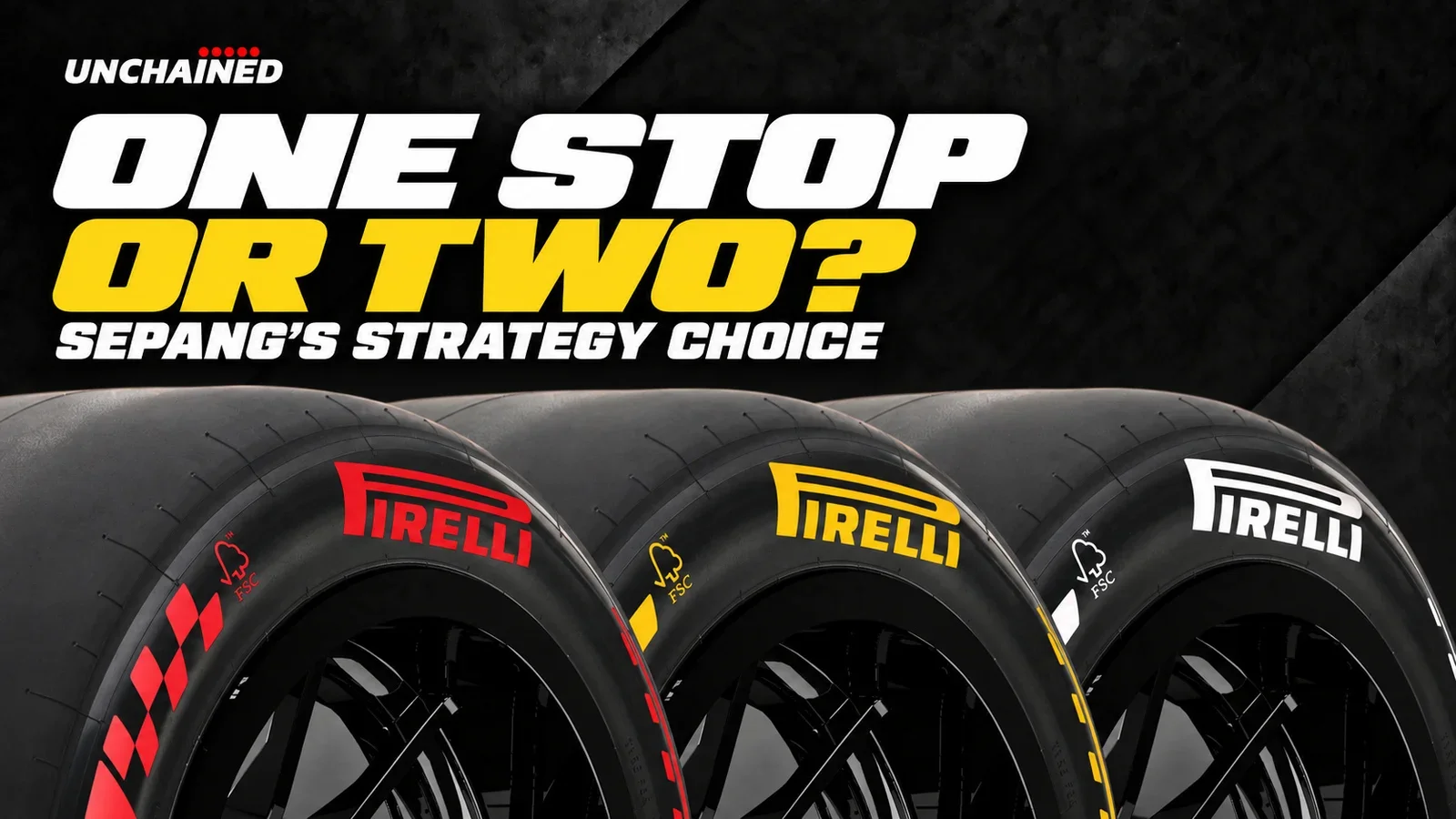
Stopping fewer times sounds like the easiest way to get ahead. Until the driver behind has fresh tires and starts taking chunks out of your advantage.
That is the contest Pirelli wants to encourage when Formula 1 returns to Sepang this weekend for the Bahrain GP in Malaysia. Its compound selection deliberately avoids the hardest end of the range, aiming to bring one-stop and two-stop strategies closer together.
The choice was announced on August 27. Now comes the interesting part: finding out whether both approaches can work on track.
Why leave the hardest option behind?
Pirelli describes Sepang’s asphalt as particularly abrasive and says it has not been resurfaced since F1’s last visit in 2017. Yet it has selected the middle of its range: C2, C3 and C4.
Those become the weekend’s Hard, Medium and Soft, respectively. There will still be a Hard tire. That label identifies the hardest of the three compounds available at this event, rather than the hardest tire Pirelli makes.
The supplier’s stated aim is to narrow the performance difference between completing the race with one stop and making two, opening up more strategic options.
Save the tires or spend another stop?
The trade-off is straightforward. A driver attempting one stop needs each set to last longer. Preserving the tires may mean accepting a slower pace to avoid losing too much performance late in the stint.
A driver making two stops can use fresher rubber more often and potentially push harder. But that extra visit to the pits costs time, which must be recovered on track.
For viewers, that creates a useful question whenever the strategies split: is the driver staying out protecting a winning advantage, or becoming a target?
Fresh tires alone do not settle it. Rejoining behind traffic could eat into the benefit, while a driver who has managed an older set well might prove difficult to catch.
Practice will reveal how close the choice really is
Pirelli’s intention is not a guarantee of a two-stop race or more overtaking. Teams still need to establish how quickly the tires lose performance, how conditions affect them and whether the extra pace justifies another stop.
Watch the longer practice runs as closely as the fastest laps. The revealing number will be how well each car holds its pace as the tires age. That could tell us who has the freedom to attack and who needs to make the rubber last.
