
Nine constructors’ titles, a return to the top, and a young world champion he backed when others doubted. Toto Wolff’s achievements command respect. For me, the decisions behind them make his place among F1’s great team bosses even more compelling.
By Miki | F1Unchained
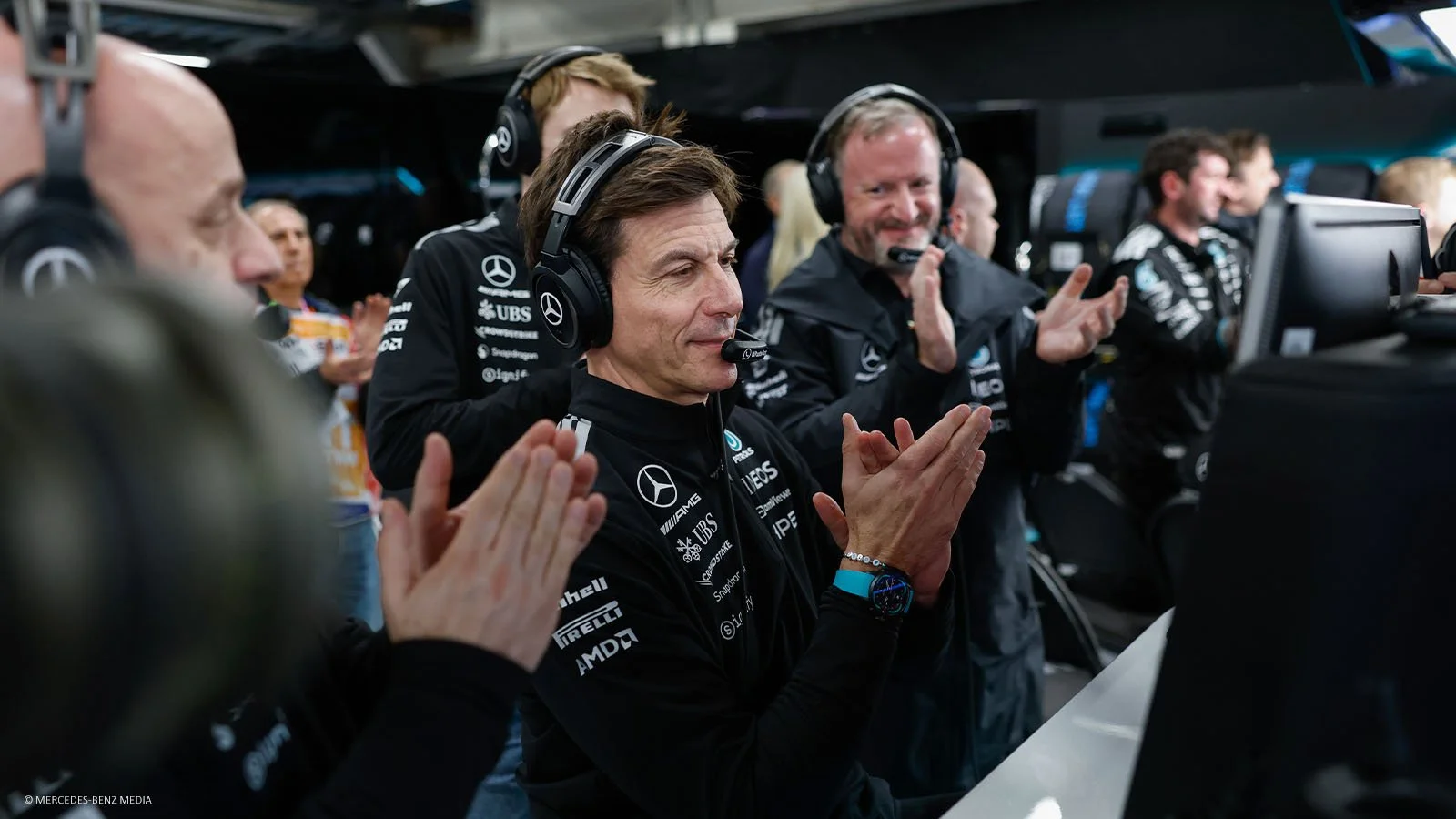
Toto Wolff says two sponsors left Mercedes because the team chose Kimi Antonelli to replace Lewis Hamilton. An 18-year-old was stepping into the seat of a seven-time world champion, and some partners weren’t convinced.
A difficult rookie season gave the doubters plenty to work with. The following year, Antonelli became Formula 1’s youngest world champion.
That decision is a good place to start when assessing Wolff. The trophies tell us what Mercedes achieved. Backing Antonelli, accepting the consequences and supporting him through the difficult months tells us something about the man leading it.
I have enormous respect for what Wolff has done at Mercedes. The 2026 season has given that respect another substantial reason.
He wanted to be the driver
Wolff’s original ambition was to race. He competed in Formula Ford and took a class victory at the Nürburgring 24 Hours in 1994, but eventually recognized the limits of his driving prospects.
In an interview with Formula 1, he recalled following Alex Wurz through a fast corner at the Österreichring. Watching what Wurz could do with the car brought an uncomfortable realization: “I can’t do that.”
He found his opportunity through business and investment instead. His motorsport interests included HWA and driver management before he invested in Williams in 2009, becoming its executive director in 2012.
Mercedes brought him in as an executive and shareholder in 2013. When Ross Brawn left at the end of that season, leadership passed to Wolff and Paddy Lowe, with responsibilities divided between the business and technical sides.
That history matters. Wolff joined an organization with substantial work already behind it. Brawn had helped establish the foundations, Niki Lauda played a major leadership role, and the engineers at Brackley and Brixworth were preparing for the hybrid era.
Wolff’s achievement was helping turn that foundation into sustained success, then leading the organization through what followed.
The record puts him among the greats
From 2014 through the 2026 Brazilian Grand Prix, Mercedes won 130 Grands Prix, nine Constructors’ Championships and eight Drivers’ Championships.
Eight of those constructors’ titles came consecutively, from 2014 to 2021. No other F1 team has matched that run.
The drivers’ titles were shared between Hamilton, with six, Nico Rosberg, with one, and now Antonelli. Mercedes has returned to championship success with an entirely different driver pairing from the one that began its dominant period.
The historical comparisons give those numbers their proper weight.
Sir Frank Williams’ team won nine constructors’ titles and seven drivers’ titles. Its first constructors’ championship came in 1980 and its ninth in 1997. Wolff has matched that constructors’ total across the 13 seasons from 2014 to 2026.
Ron Dennis led McLaren to seven constructors’ championships and ten drivers’ championships during his spell as team principal from 1981 to early 2009. Wolff now has the same combined total of 17, with a different balance between the two championships.
Christian Horner’s Red Bull tenure, from 2005 to 2025, produced six constructors’ titles and eight drivers’ titles. Wolff has matched the drivers’ total and exceeded the constructors’ count by three.
Those are different careers, built under different circumstances. Frank Williams created an independent team with Patrick Head. Dennis transformed McLaren. Horner took Red Bull from its first season to championship-winning eras with Sebastian Vettel and Max Verstappen.
Wolff belongs in that company. His record is substantial enough that the discussion should be about his position among them.
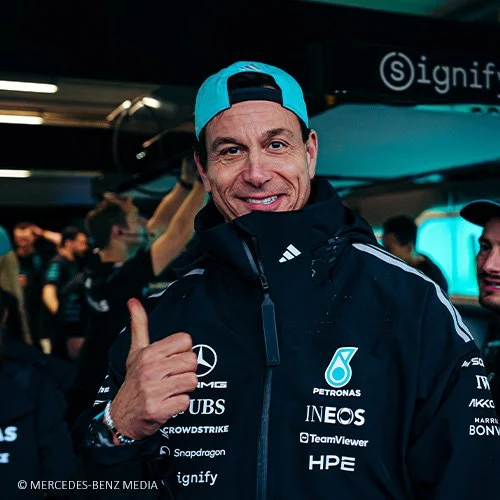
The Antonelli decision carried real consequences
Replacing Hamilton was always going to bring scrutiny. Giving his seat to a teenager made Wolff personally accountable for a much bolder choice.
He has described it as a “calculated risk.” Mercedes had junior results, testing and its own assessment of Antonelli’s potential. Wolff was convinced.
Others weren’t. According to his account, two sponsors walked away. He has not identified them.
That made the decision more than a sporting judgment. Mercedes was accepting commercial consequences while asking a young driver to develop under the attention that comes with one of F1’s biggest teams.
The real test came when Antonelli struggled in 2025. Supporting a prospect is straightforward when the results are encouraging. Keeping that support in place when people are questioning whether he belongs in the car requires more conviction.
Wolff and Mercedes stayed with him. Antonelli secured the 2026 championship in Mexico, in only his second F1 season.
The driver deserves the credit for delivering on track. Wolff deserves credit for giving him the opportunity and allowing him time to grow into it.
His critics have something to point to
Respecting Wolff’s achievements does not make every public comment or decision beyond criticism.
During the 2022 dispute over bouncing cars, Christian Horner accused him of creating “theatre” in a team bosses’ meeting. Wolff argued that intervention was necessary for driver safety; his rivals questioned whether Mercedes was trying to secure changes that would help its own struggling car.
His response to Verstappen’s tenth consecutive victory in 2023 was another avoidable moment. Describing the record as something for Wikipedia sounded dismissive. Wolff later acknowledged that it might not have been the most intelligent thing to say.
I don’t need to defend that remark to respect his career. Recognizing an opponent’s achievement should be easier for someone who understands exactly how difficult winning is.
There were also failures with consequences well beyond an interview. Mercedes got the 2022 regulations wrong, went winless in 2023 and finished fourth in 2024.
A fair assessment has to hold Wolff accountable for those years as well as celebrate the dominant ones.
The comeback adds something the winning streak couldn’t
Mercedes’ return in 2026 is what makes this assessment especially interesting.
Wolff has now led through sustained dominance, difficult years and a return to championship success with a young driver he backed through considerable doubt.
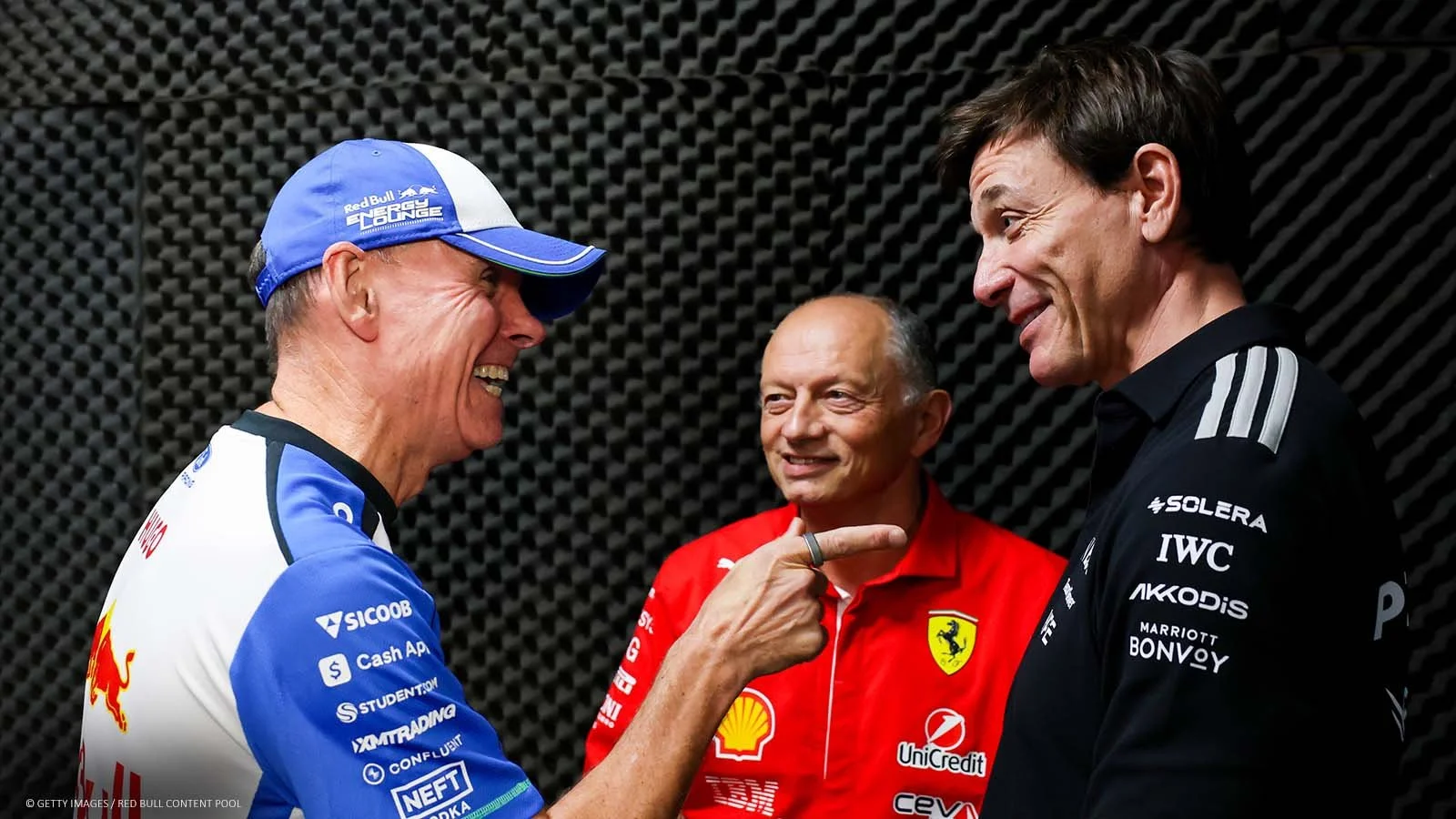
Other team principals have recognized the work behind that recovery.
After Brazil, McLaren’s Andrea Stella emphasized the standard of the opposition Mercedes had beaten, arguing that winning in such a competitive environment reflected the quality of its work.
Red Bull’s Laurent Mekies called it an “outstanding job.” His explanation was more useful than a routine congratulations: committing early to the 2026 car was one thing; converting that head start into performance was another. Mercedes had done both.
Former Ferrari team principal Stefano Domenicali, now F1’s CEO, described Wolff matching Frank Williams as a “powerful testament to Toto’s leadership, vision and relentless pursuit of excellence.”
Those comments recognize a team effort, as they should. Wolff did not design the car, build the power unit or drive it to the championship. His responsibility was to help the people doing those jobs succeed together, and to keep the organization moving when its old answers stopped working.
Where I put him
For me, Wolff belongs in the highest tier of Formula 1 team principals, alongside figures such as Frank Williams and Ron Dennis.
The nine constructors’ titles establish his standing. The unprecedented winning streak demonstrates how long Mercedes maintained its standards. The comeback and the Antonelli decision show that his leadership could produce success after the circumstances had changed.
That last part matters most to my assessment today. Mercedes had lost its dominance and its most successful driver. Wolff remained responsible for what came next.
What came next was another championship-winning team and the youngest world champion the sport has seen.
That is a career I have enormous respect for.
— Miki
Where would you place Toto Wolff among F1’s greatest team principals, and which part of his record matters most to you?
Respectful disagreement is welcome. Personal attacks, abuse and spam will be removed.
