
Honda Reaches 500 F1 Races: Why Its Difficult 2026 Is Only One Chapter
Honda heads to Austin with 500 races to celebrate and an Aston Martin partnership struggling near the bottom of the standings. Its history explains why both deserve attention, and why a difficult beginning doesn’t settle what comes next.
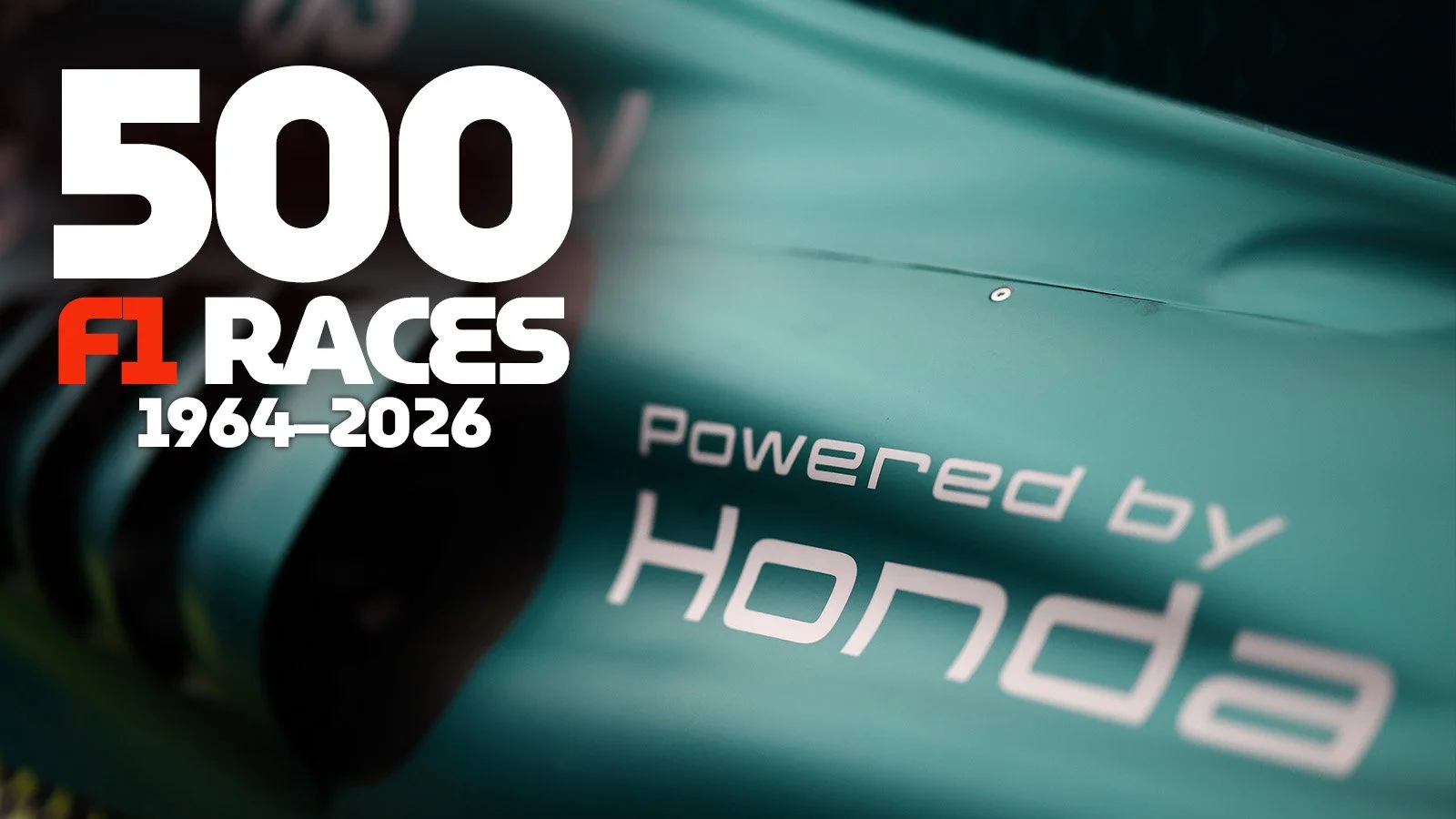
Seven points. Tenth in the championship. Five hundred Formula 1 races.
Honda will arrive at the United States Grand Prix with an uncomfortable contrast between its current results and its place in the sport’s history. Aston Martin’s first season with Honda power has produced little to celebrate on track. At Circuit of The Americas, however, the Japanese manufacturer will reach a milestone stretching back to 1964.
Fernando Alonso and Lance Stroll’s AMR26 cars will carry a special Honda500 logo. Honda Racing Corporation’s trackside engineers will wear commemorative uniforms.
The celebrations are deserved. So is an honest look at the standings.
Honda’s history includes the engines behind Ayrton Senna’s championships and Max Verstappen’s breakthrough title. It also includes unsuccessful partnerships, withdrawals and years spent rebuilding. Understanding that history means looking at what happened between the victories.
The comeback that matters most now
Honda’s return with McLaren in 2015 brought two famous names back together. It did not bring back their winning form.
Performance and reliability problems defined a partnership that ended after three seasons. The reputation built during their previous championship years offered no protection against the demands of modern hybrid power units.
Honda continued with Toro Rosso in 2018, then added Red Bull Racing in 2019. That June, Verstappen won the Austrian Grand Prix, delivering Honda’s first victory of the hybrid era.
In 2021, he became world champion with Red Bull Racing Honda.
That sequence matters more to the Aston Martin project than a collection of trophies. Honda’s unsuccessful McLaren return was followed by a recovery with different partners. The early results were real, but they did not describe everything Honda would eventually achieve.
There is no reason to assume the same turnaround will happen again, or on the same timetable. There is a clear reason to resist treating one difficult season as a permanent verdict.
Dominance came in chapters
Honda’s first F1 appearance came at the 1964 German Grand Prix. Richie Ginther delivered its first victory in Mexico the following year, and John Surtees added another in Italy in 1967. Honda withdrew after 1968.
Its return as an engine supplier in 1983 eventually produced a very different level of success.
Williams Honda won the 1986 Constructors’ Championship, then both titles with Nelson Piquet in 1987. McLaren Honda followed with four consecutive championship doubles from 1988 through 1991.
Across those six seasons, Honda-powered teams won every constructors’ title. Piquet, Alain Prost and Senna collected five drivers’ championships between them.
The defining image is McLaren’s 1988 season: Senna and Prost winning 15 of 16 races. Yet even that dominance belonged to a particular partnership, technical era and group of people. It was not a permanent condition Honda could simply reactivate whenever it returned.
The next comeback made that clear.
Success did not prevent another exit
Honda returned with BAR in 2000. The team reached second in the Constructors’ Championship in 2004, and Honda subsequently took full ownership.
Jenson Button’s victory in the wet at Hungary in 2006 provided a memorable high point. It did not lead to a sustained championship challenge.
At the end of 2008, Honda withdrew again. Its announcement cited the rapidly deteriorating automotive business environment and global financial crisis.
Honda has improved, won and still left.
What Honda’s 500 actually counts
Honda’s official milestone counts Grands Prix in which the engine or power unit was registered as Honda.
The 2022–2025 Red Bull Powertrains period therefore sits outside that total, even though Honda and HRC continued providing technical power-unit support.
Those seasons remain part of the broader story. Red Bull won the 2022 and 2023 Constructors’ Championships during that support period, while Verstappen extended his run to four consecutive drivers’ titles through 2024.
The distinction matters: 500 is a specific entry-based milestone, rather than a count of every race influenced by Honda’s engineering.
Aston Martin must write its own chapter
The current partnership began under the new 2026 regulations, with Honda supplying its RA626H power unit to Aston Martin.
After 17 rounds, Aston Martin is 10th of 11 teams with seven points. That is the partnership’s competitive position, not a measurement that isolates responsibility between the chassis and power unit.
History cannot improve the AMR26 or supply the answers its engineers need. Those must come from the current project.
But history does change how the opening year should be judged. Honda has already demonstrated that a troubled partnership need not define its next one, and that championship success can follow years of disappointment.
Race 500 recognizes what Honda has achieved. What happens after it will determine whether Aston Martin becomes another recovery story.
