
Big Wings, Less Grip: Mexico’s Setup Trap
At more than 2,200 meters above sea level, Mexico lets F1 cars run large wings with a smaller drag penalty. The catch: the same thin air takes away downforce and makes cooling harder.
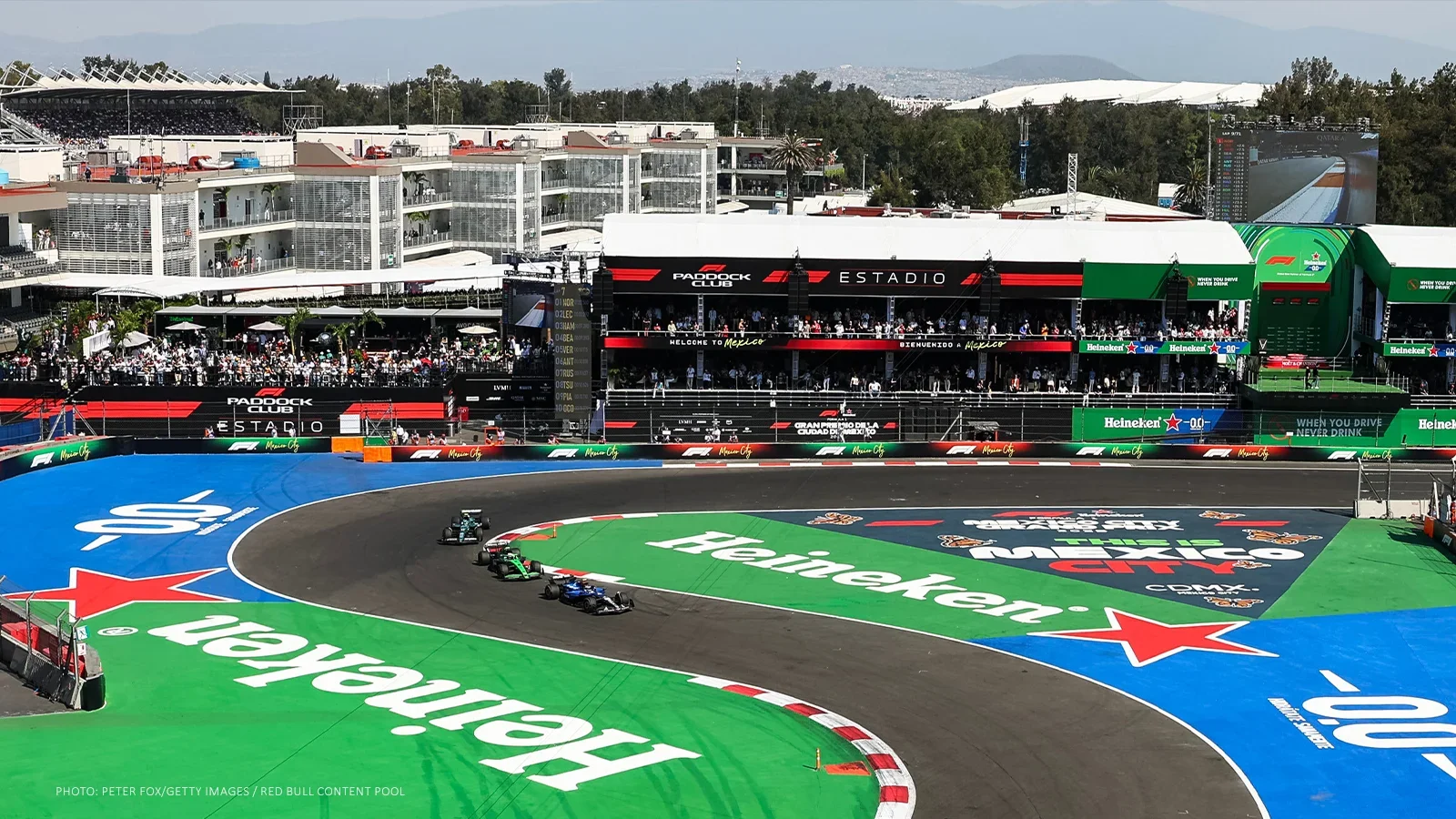
The rear wings suggest a car built for corners. The speed on the straight suggests something else.
Mexico allows both. Its thin air offers less resistance, so teams can fit substantial wings without sacrificing as much straight-line performance as they would at a lower-altitude circuit.
But those wings also have less air to work with. Their size doesn’t translate into the grip drivers would normally expect from the same configuration.
For the Mexican GP, finding speed means managing that mismatch.
A bigger wing can’t replace the missing air
Downforce pushes the car into the track, helping the tires generate grip. Reduced air density weakens that effect, leaving teams trying to recover aerodynamic performance while drivers adapt to a car with less support through the corners.
Audi’s Mexico preview identifies traction and braking stability as particular priorities. The circuit combines heavy braking zones with slower sections where drivers need the car to turn cleanly and accelerate without wasting grip.
That makes the speed trap an incomplete guide to competitiveness. A car gaining time on the straight can surrender it under braking or struggle to put its power down on exit.
Cooling takes a share of the performance
The air passing through the car also removes heat from its components. In Mexico, reduced airflow through the radiators and brake ducts makes that job harder, even when the weather isn’t unusually hot.
Larger cooling openings can help, but they carry an aerodynamic cost. Engineers must give the car enough cooling capacity without giving away more performance than necessary.
The brakes face a particularly awkward combination: repeated heavy stops and less effective cooling. Managing their temperature is about maintaining braking performance as well as protecting the hardware.
Why Mexico can change the competitive picture
Every team faces the same altitude, but not every car handles the compromise equally well. Cooling requirements, aerodynamic performance and balance all influence how much speed survives the adjustment.
For teams chasing a small points advantage, that creates an opportunity without requiring a new upgrade. A package that copes better with Mexico’s conditions could become more competitive relative to its rivals.
Practice should offer clues beyond the fastest lap: stability into the braking zones, traction out of the slow corners and whether a car maintains its pace over consecutive laps. Those are the areas where Mexico’s unusual setup can start to pay off—or unravel.
