
Pirelli Changes Mexico’s Hard Tire. Will Teams Use It?
Teams largely passed over Mexico’s hard tire last year. Pirelli has changed the selection for 2026, putting a potentially useful race option back under scrutiny.
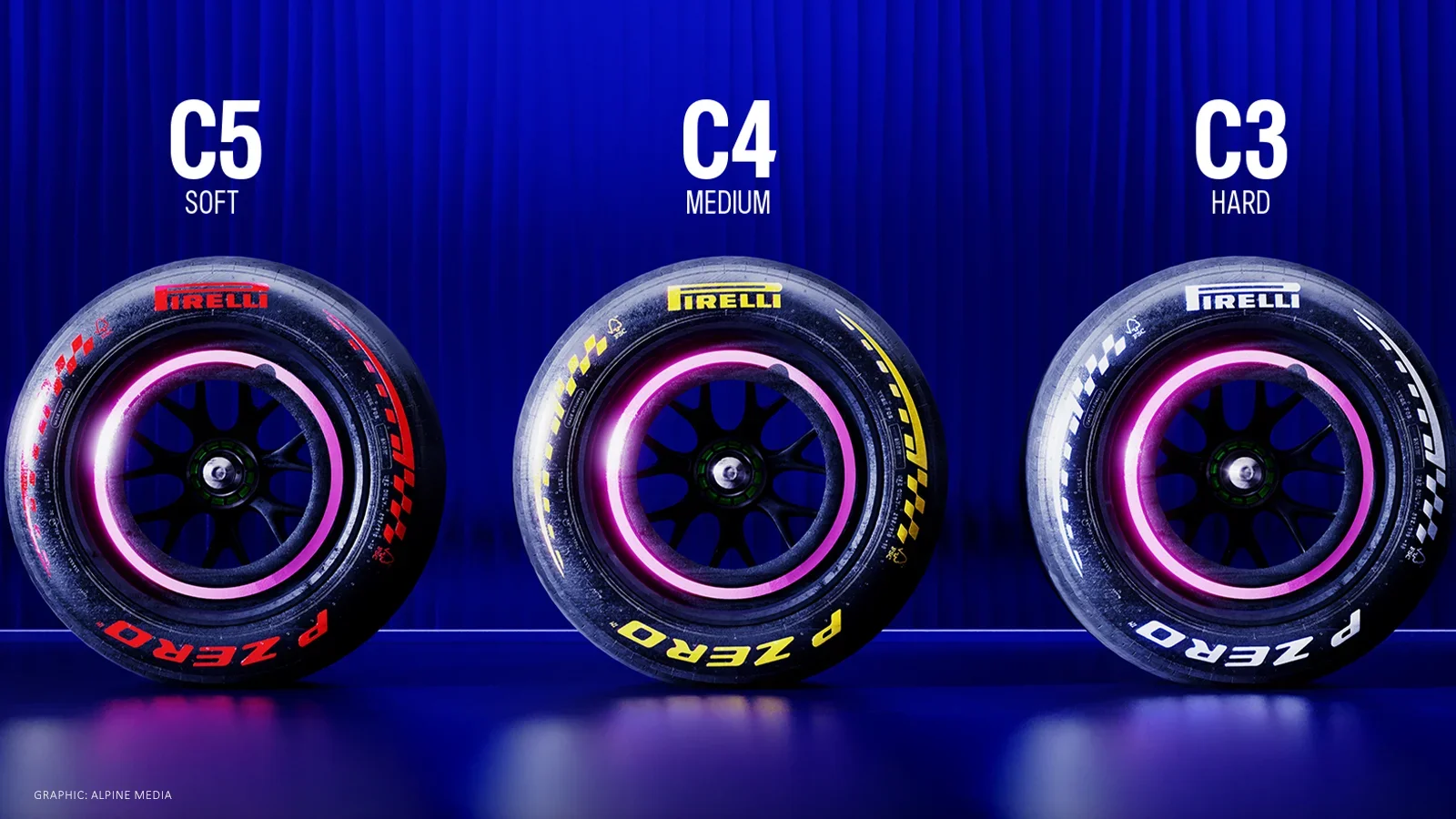
Pirelli is bringing C3, C4 and C5 to Mexico, with C3 designated hard, C4 medium and C5 soft. The change is at the harder end: last year’s allocation paired C2 with C4 and C5, skipping C3 entirely.
That wider gap was deliberate. Pirelli wanted to see whether a harder compound could help teams cut a pit stop. Instead, teams made extensive use of the medium and soft, leaving the hard with a limited role.
For 2026, Mexico returns to three consecutive compounds. That narrows the gap in the selection, although matching compound labels across seasons shouldn’t be read as identical tire construction or performance.
Why the hard has to earn its place
Durability alone doesn’t make a tire useful. A longer stint only pays off if the time saved by avoiding a stop outweighs the time lost running a slower compound.
That’s the calculation behind Mexico’s revised selection. If the C3 delivers competitive pace over a long run, teams gain another credible way to divide the race. If it takes too long to reach its operating temperature or gives away too much speed, its potential lifespan becomes less valuable.
There’s also a distinction between being quick on a clear track and being useful in traffic. A driver emerging from the pits needs enough grip to defend or attack immediately. A tire that improves several laps later can leave the team exposed in the meantime.
More choice doesn’t necessarily mean more stops
A more competitive hard could strengthen a one-stop strategy by making a long final stint easier to manage. Alternatively, if the medium and soft offer enough extra pace, an additional stop could still be worthwhile.
The selection therefore opens a question rather than answering it. Teams must establish the performance gap between compounds, how quickly that gap changes as the tires age, and whether a fresh set provides enough advantage to recover the cost of another pit visit.
What to watch in practice
The useful comparison will be the hard tire’s pace after several consecutive laps, particularly against the medium. One quick lap won’t show whether the C3 can sustain a stint or how much preparation it needs.
Fuel loads and run plans will complicate comparisons between teams. Within each team’s running, though, the hard’s consistency and warm-up should provide clues about whether it has become a genuine Sunday option.
