
Legal in 2026. Changing for 2027. What Happens to Red Bull and Audi’s Sidepods?
A design can comply with Formula 1’s rules and still prompt the FIA to change them. A detail associated with Red Bull and Audi’s sidepods is the latest example.
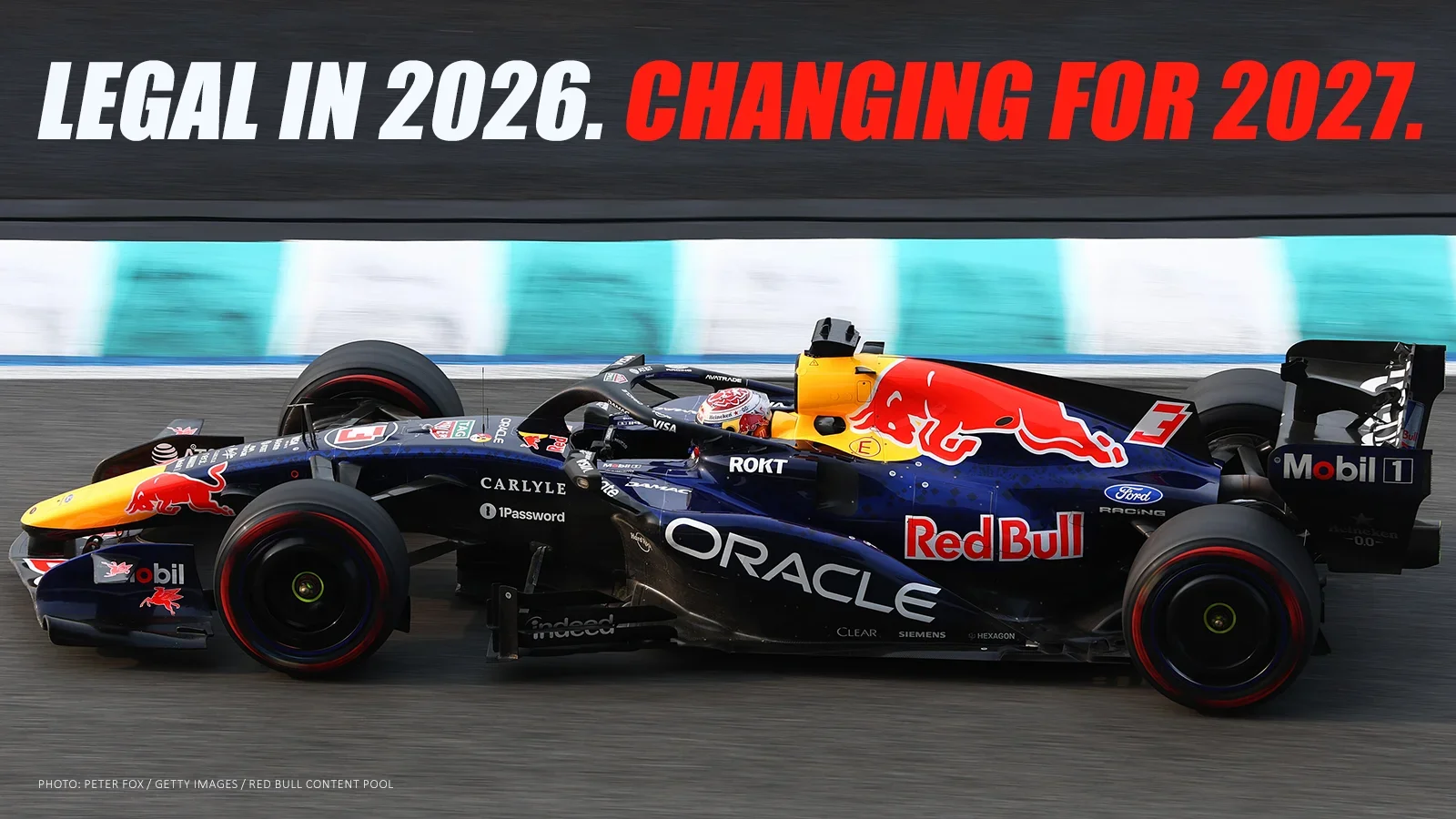
According to Grandprix.com’s October 15 report, both teams have used a floor-support arrangement that allows an unusually sharp lower sidepod edge under the 2026 regulations. The published rules for 2027 tighten the requirements around that arrangement.
The distinction matters. This concerns how next year’s cars must be designed. It does not mean the current solution has suddenly become illegal.
What is changing?
The detail involves a floor stay, a slender structural support, and where it meets the surrounding bodywork.
Grandprix.com reports that Red Bull used this intersection to take advantage of an exception to the usual bodywork-radius requirements. That allowed a sharper edge than the surrounding surface would otherwise permit. Audi subsequently adopted a similar approach.
The FIA’s 2027 technical regulations place specific limits on where floor stays can intersect bodywork. Article C3.5.14 permits those intersections only in defined areas near the attachment points and at limited locations on the engine cover.
The regulations also address continuity between aerodynamic surfaces. In plain English, adjoining surfaces must meet smoothly within the prescribed requirements.
These restrictions govern the geometry of the components and their junctions. They do not prohibit sidepods as a concept or require every team to use the same shape.
Does the rule apply only to Red Bull and Audi?
No. The regulations apply across the grid.
Red Bull and Audi are the teams identified in reporting about this particular interpretation. The FIA’s published wording does not name either team.
That distinction separates the rule itself from the reporting about which existing designs it affects. A team pursuing a comparable arrangement would also have to comply with the 2027 requirements.
What does it mean for performance?
The published rules do not quantify a performance loss, and there is no verified lap-time figure to attach to this change.
Teams will have to assess the revised requirements as part of their complete 2027 designs. Removing a particular interpretation does not tell us how effectively they can replace it, or how their next cars will compare with their rivals.
That is why describing this as a major competitive setback would go beyond the evidence available.
The confirmed development is narrower: the FIA has specified tighter requirements for next year’s bodywork and support arrangements. Reporting identifies Red Bull and Audi’s current solution as an approach affected by those requirements.
For now, the distinction is straightforward. Legal under the current rules does not guarantee a design has a place in the next rulebook.
