
Alpine Is Losing Money. Why Is Renault Still All In?
Renault knows Alpine’s Formula 1 involvement is costing it money. Its chief executive still sees a reason to stay: the opportunity to put a French performance brand in front of a global audience. The challenge is turning that presence into a return.
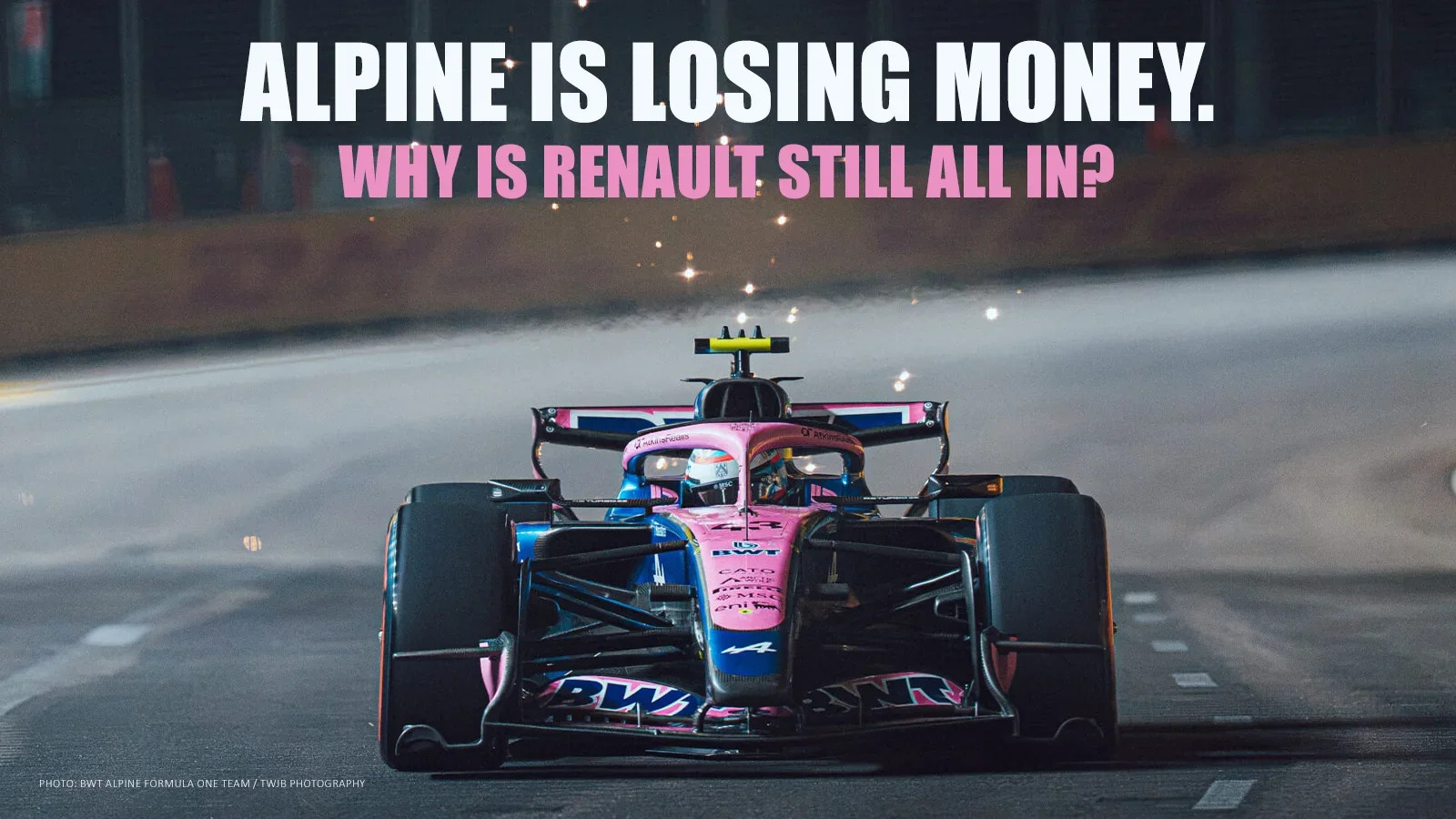
At the Paris Motor Show, Renault Group CEO François Provost acknowledged the financial difficulty while defending the company’s commitment during an exchange involving French President Emmanuel Macron and Pierre Gasly. According to F1ACTU’s October 12 report, Provost said Renault was losing money but needed to maintain its ambition.
If the investment is losing money, what does Renault believe it can eventually deliver?
According to F1i’s reporting of his comments to BFM TV, Provost linked the investment’s return to Alpine competing near the front and gaining television exposure. He also emphasized the value of a French brand competing internationally with a French driver.
His explanation connects sporting performance with commercial opportunity. Entering the championship puts Alpine on the stage. Running near the front gives it a stronger chance to command attention.
Renault has already made a choice
There is more behind this position than an optimistic conversation at a motor show.
On February 12, Alpine announced that it would leave the World Endurance Championship after the 2026 season and concentrate its top-level motorsport effort on Formula 1. The company described a need to prioritize projects amid tougher conditions in the automotive industry.
In that announcement, Alpine CEO Philippe Krief explicitly connected Formula 1 with building brand awareness to support the company’s product and market growth.
That decision gives Provost’s comments useful context. Renault has been reassessing where it spends money, and Formula 1 has retained a place in its plans.
For a manufacturer, the potential return extends beyond the race team’s accounts. Recognition of the Alpine name and its association with performance can also matter to the wider business. Whether those benefits justify the investment remains a separate question from whether the team itself makes a profit.
Continuing to fund the program therefore reflects a belief in what Formula 1 can deliver for Alpine. It does not establish that the investment has already paid off.
Commitment still needs results
The reported remarks do not provide a loss figure, an accounting period or a timetable for profitability. They should not be treated as a detailed financial disclosure or extended into a claim about the finances of the entire Renault Group.
They do, however, explain the logic Renault is defending: improve the sporting results, gain more valuable exposure and strengthen the Alpine brand.
Provost’s explanation sets a demanding benchmark for the team. Renault wants the visibility that comes with competing near the front. Continued investment gives Alpine an opportunity to reach that level, but the sporting results still have to follow.
There is also a distinction between supporting the program and guaranteeing its success. Renault’s commitment does not tell us how quickly Alpine can become competitive, how much more the company is prepared to spend or when it expects a financial return.
What it does show is that the company still sees a role for Formula 1 in Alpine’s future, even while acknowledging the cost of pursuing it.
Renault has explained why it wants Alpine in Formula 1. The harder job belongs to the team: delivering the results that make that commitment worthwhile.
