
Sepang’s Heat Hazard: The Challenge Beyond Lap Time
The FIA has declared a heat hazard for the Bahrain Grand Prix in Malaysia, bringing driver cooling and extra weight into the preparations for Sepang.
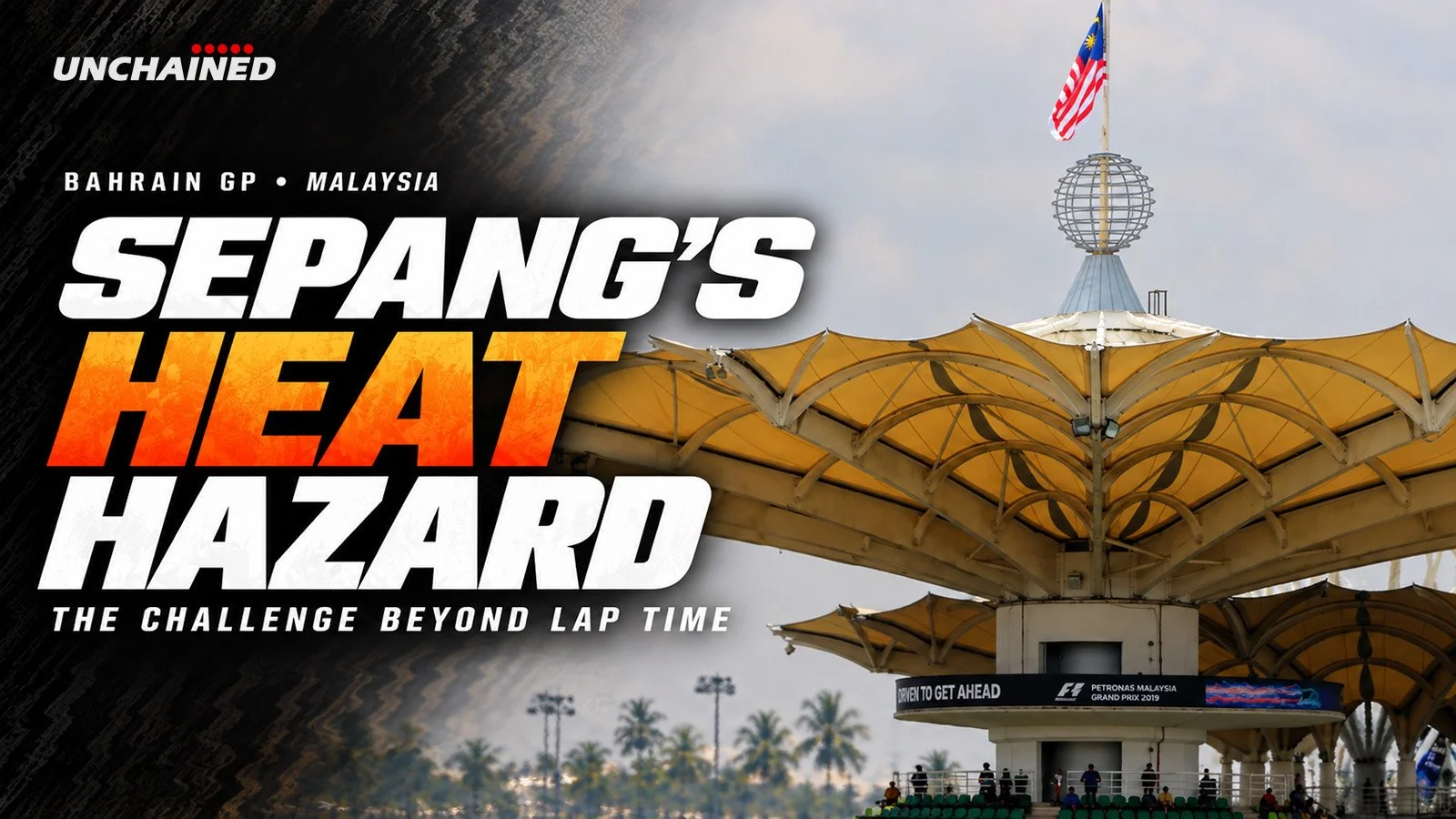
Finding speed at Sepang is only part of the job. Maintaining it through a hot, humid race puts another demand on the person behind the wheel.
The FIA has declared a heat hazard for this weekend’s Bahrain Grand Prix, held at Sepang in Malaysia. Its official weather service forecasts a heat index above 31°C at some point during the race, triggering specific cooling requirements before the cars reach the grid.
That’s a forecast-based precaution. It doesn’t tell us exactly what conditions the drivers will experience on Sunday.
Why humidity matters
The heat index combines air temperature and relative humidity to indicate how hot conditions feel. It isn’t simply the temperature shown on a thermometer, and it isn’t a measurement of cockpit temperature.
Humidity matters because sweat cools the body as it evaporates. When the air is already carrying plenty of moisture, that process becomes less effective.
At Sepang, that adds to the effort of repeated braking and fast changes of direction. Drivers must keep delivering precise inputs while managing the physical strain of the race.
What the declaration changes
Under the current 2026 rules, teams must fit the cooling-system hardware throughout the event. For the race, the system must be functional and available to the driver.
Drivers can still choose not to wear the personal cooling equipment. But that doesn’t allow teams to remove the rest of the system: the other components, including the cooling medium, must remain fitted. Opting out also requires 0.5kg of cockpit ballast.
The race carries a 5kg increase in minimum weight under the heat-hazard provisions. A smaller 2kg increase applies in other sessions that aren’t themselves declared heat hazards. These allowances account for the cooling equipment rather than making its use a competitive disadvantage.
Cooling helps, but the challenge remains
The equipment provides additional cooling while drivers are working. It doesn’t remove the demands of Sepang’s layout or make the weather predictable.
Teams still have to prepare for conditions that can change across the weekend. For the drivers, the challenge is sustaining the same accuracy late in the race that they bring to the opening laps.
