
The Smile and the Steel: Inside Kimi Antonelli’s Record-Breaking Second Season
At 20, Antonelli has combined an easy smile and grounded personality with eight victories, historic records and an aggressive driving style seemingly built for Formula 1’s new era.
By Miki | F1Unchained
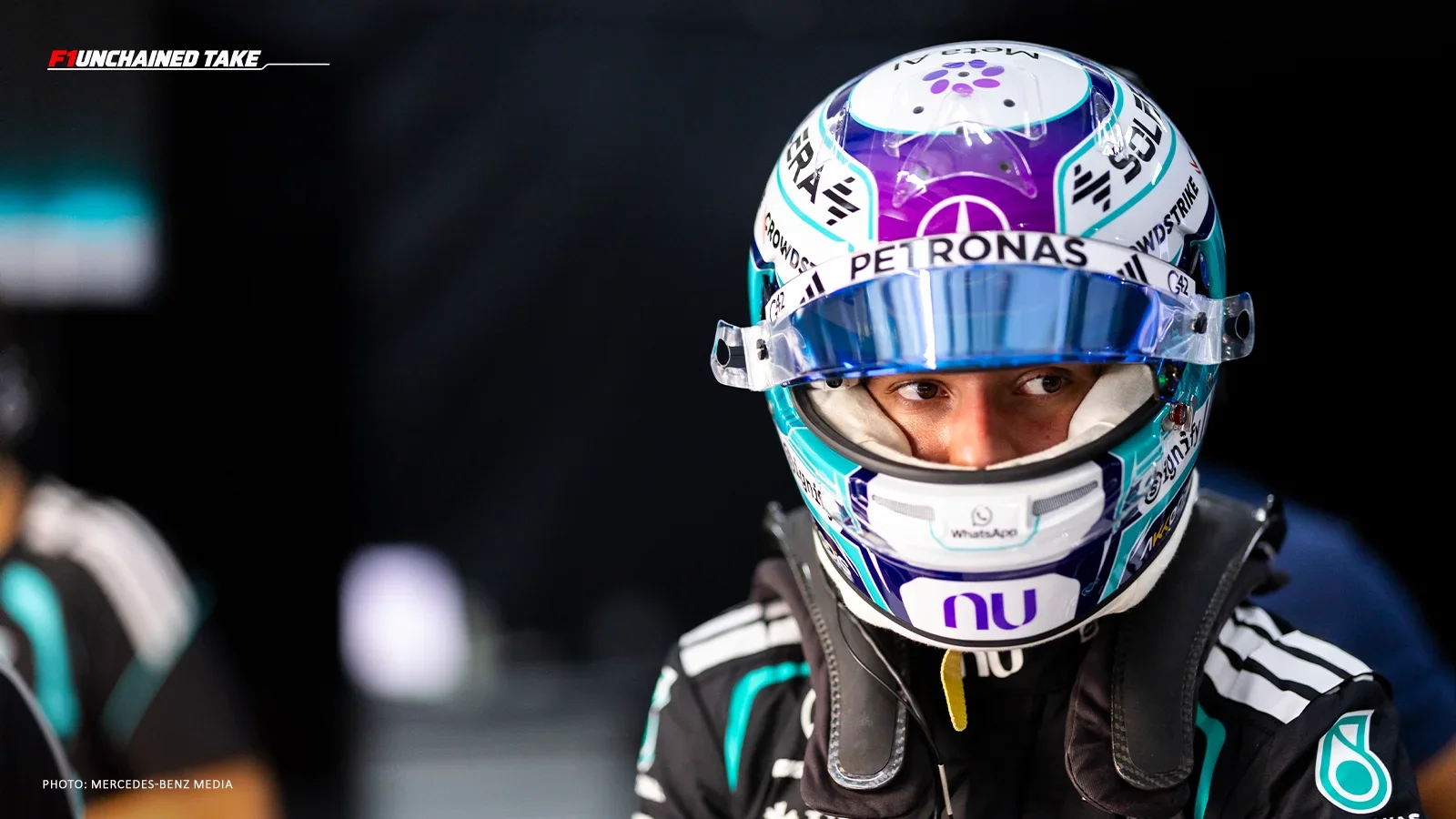
Away from the car, Kimi Antonelli still looks and sounds like the youngest driver in the room. He smiles easily, jokes with his mechanics and speaks openly about his family, his mistakes and everything he still needs to learn.
Then the visor comes down.
The relaxed 20-year-old disappears, replaced by a driver who attacks corners, opportunities and opponents with complete conviction. To me, that contrast—the warmth outside the cockpit and the intensity inside it—may be the most revealing part of Antonelli’s extraordinary rise.
THE PERSON BEHIND THE HELMET
Antonelli has never tried to manufacture the image of an untouchable Formula 1 star. He has spoken about eating meals prepared by his grandmother, working with a psychologist after his rookie season and receiving the occasional necessary “kick” from his engineers.
Mercedes has also shown the lighter side: birthday pranks, jokes with the team and Antonelli planning to surprise race engineer Peter Bonnington with a water gun.
But Antonelli understands the difference between being relaxed and being uncompetitive. He has said that he can “fully lock in” at the circuit. Even harmless activities such as bowling or paintball with friends bring out a version of him that becomes intensely focused and barely speaks.
The friendliness is real. So is the competitive instinct.
That combination has also helped him inside Mercedes. He appears comfortable crediting the team, accepting criticism and acknowledging when he has pushed too hard. None of that has softened the way he races.
A DRIVING STYLE MADE FOR THE NEW ERA
Antonelli’s rise has arrived alongside Formula 1’s major 2026 technical reset.
The new generation of cars demands a different approach, and Antonelli’s natural style appears particularly well suited to it. He uses sharp steering inputs, rotates the car aggressively and tries to shorten the corner before returning to the throttle.
It isn’t always the smoothest-looking method, but it allows him to attack low- and medium-speed corners with confidence. When grip is limited and the car needs decisive direction, Antonelli seems comfortable living close to the edge.
That doesn’t mean the regulations created his success. Mercedes produced the strongest overall package, and no driver wins eight Grands Prix without a front-running car.
But Antonelli has done more than benefit from the machinery. He has understood what the new car demands and turned those demands into an advantage remarkably quickly.
A SECOND SEASON BESIDE THE GREATS
The statistics already place Antonelli’s second campaign in rare company.
Through 17 Grands Prix in 2026, he has recorded eight wins, 14 podiums, six pole positions and seven fastest laps. He leads the championship with 340 points.
His growing list of achievements includes:
The youngest Grand Prix polesitter in Formula 1 history
The second-youngest Grand Prix winner, behind Max Verstappen
The youngest driver to lead the World Championship
The youngest Monaco Grand Prix winner
A Monaco Grand Slam: pole, victory, fastest lap and every lap led
Five consecutive Grand Prix victories
The first driver to convert his first three Grand Prix poles into three consecutive wins
The first Italian Grand Prix winner since Giancarlo Fisichella in 2006
Cross-era comparisons are never perfect. Modern seasons contain more races, points systems have changed and earlier generations dealt with levels of unreliability that would be almost unimaginable today.
Even with those qualifications, Antonelli’s second season stands out.
Lewis Hamilton won five races and the championship during his second season in 2008 at age 23. Jacques Villeneuve won seven races and the title in his second campaign at 26. Ayrton Senna’s second season produced two victories and seven poles. Michael Schumacher recorded one win and eight podiums in his second F1 campaign.
Max Verstappen was younger when he earned his first victory, but his second season produced one win and seven podiums. Sebastian Vettel claimed four victories and finished second in the championship during his second full campaign. Charles Leclerc and Oscar Piastri each won twice in their second seasons.
Antonelli already has more second-season victories than any of them.
That doesn’t make him greater than Hamilton, Senna, Schumacher, Vettel or Verstappen. Greatness is established across seasons, different cars and periods when victory isn’t readily available.
But at the same stage of his career, Antonelli is building a statistical beginning that belongs in that company.
WHEN THE STUDENT STARTS SETTING THE PACE
George Russell comprehensively beat Antonelli 319–150 in 2025.
That was neither surprising nor damaging to Antonelli’s reputation. Russell was the established Mercedes leader operating near the peak of his career. Antonelli was an 18-year-old rookie learning Formula 1 in public.
One season later, the relationship feels different.
The driver who was absorbing lessons is now setting much of the pace. The former mentor and young apprentice increasingly look like two front-line rivals whose roles have quietly shifted.
That isn’t an indictment of Russell, who remains one of Formula 1’s strongest drivers and has been affected by more reliability problems this season. Formula 1 estimated that reliability had cost Russell approximately 56 points and Antonelli around 36.
The 102-point championship gap cannot be treated as pure driver superiority. It is still evidence of how quickly Antonelli has developed.
THE FINAL TAKE
It is tempting to treat Antonelli’s championship lead as proof that Formula 1 has already found its next defining driver. I think that conclusion can wait.
We still need to see him fight through seasons when Mercedes doesn’t have the strongest car. We need to see how he responds when victories become harder, rivals understand his strengths and expectations grow heavier.
Those tests eventually come for every great driver.
What I can already say is that Formula 1 has rarely seen a 20-year-old achieve this much, this quickly, while appearing so unaffected by the attention surrounding him.
The smile is genuine. So is the humility.
But beneath both is the steel of a driver who didn’t enter Formula 1 merely to become its future. He is already shaping its new era.
— Miki
Does Antonelli’s second season already belong among the greatest starts to an F1 career, or do you need to see him win without the strongest car first?
Respectful disagreement is welcome. Personal attacks, abuse and spam will be removed.
