
Four years after his first Grand Prix victory, George Russell returns to Brazil with his teammate crowned champion and his own form under scrutiny. His response starts with a problem Mexico made impossible to ignore.
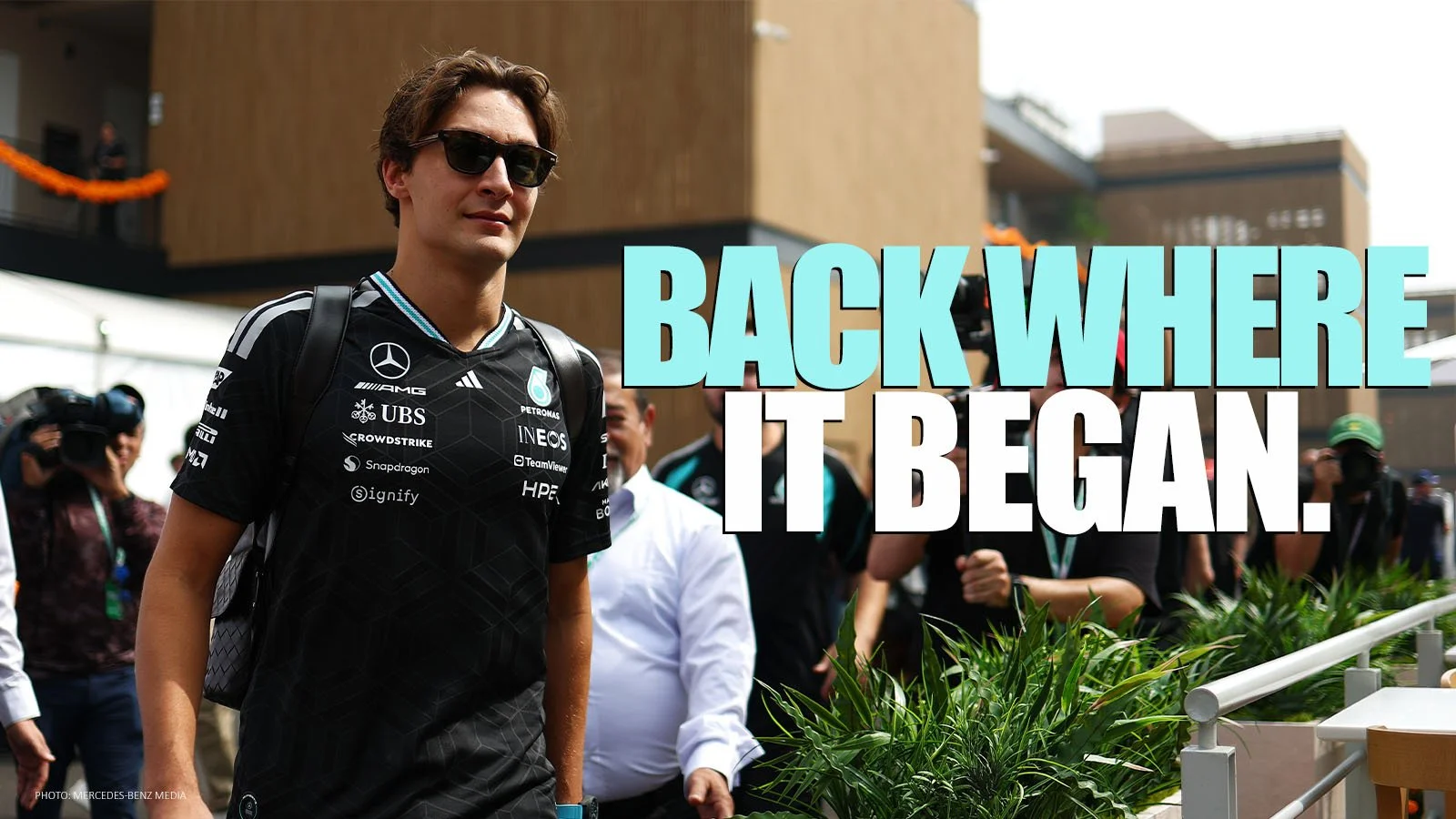
George Russell missed pole position in Mexico by nine thousandths of a second. By Sunday evening, he was sixth, his teammate was world champion, and another weekend of genuine promise had ended in frustration.
The next stop is Interlagos, where Russell stood on top of a Grand Prix podium for the first time in 2022. He returns with three wins this season, but without the consistency that turned Kimi Antonelli’s campaign into a championship.
In a message shared after Mexico, Russell acknowledged both bad luck and poor performances. He congratulated Antonelli and committed himself to recovering the level he knows he can produce.
His assessment of the year was blunt: “2026 was not meant to be my year.”
There are still four race weekends in which to decide how it ends.
The speed is there. The repeatability isn’t.
Saturday in Mexico showed why Russell’s season has been so difficult to make sense of.
He had struggled to feel competitive, then produced a lap that nearly beat Lewis Hamilton to pole. The performance was there when he needed it. Finding it had taken almost the entire qualifying session.
Russell described a car he was still struggling to get on top of, with too much variation between his good laps and his bad ones.
“I know the performance is in there,” he said, “but… the hit rate is too low at the moment.”
That is the challenge Brazil gives him another opportunity to address. A quick qualifying lap can put him in contention. Building a weekend in which that pace arrives reliably would be a more useful sign of progress.
It also makes the comparison with Antonelli difficult to avoid. Mercedes has produced a championship-winning package. Russell has won with it. The question is why he has been unable to deliver at that level often enough.
Mexico went wrong before the first corner
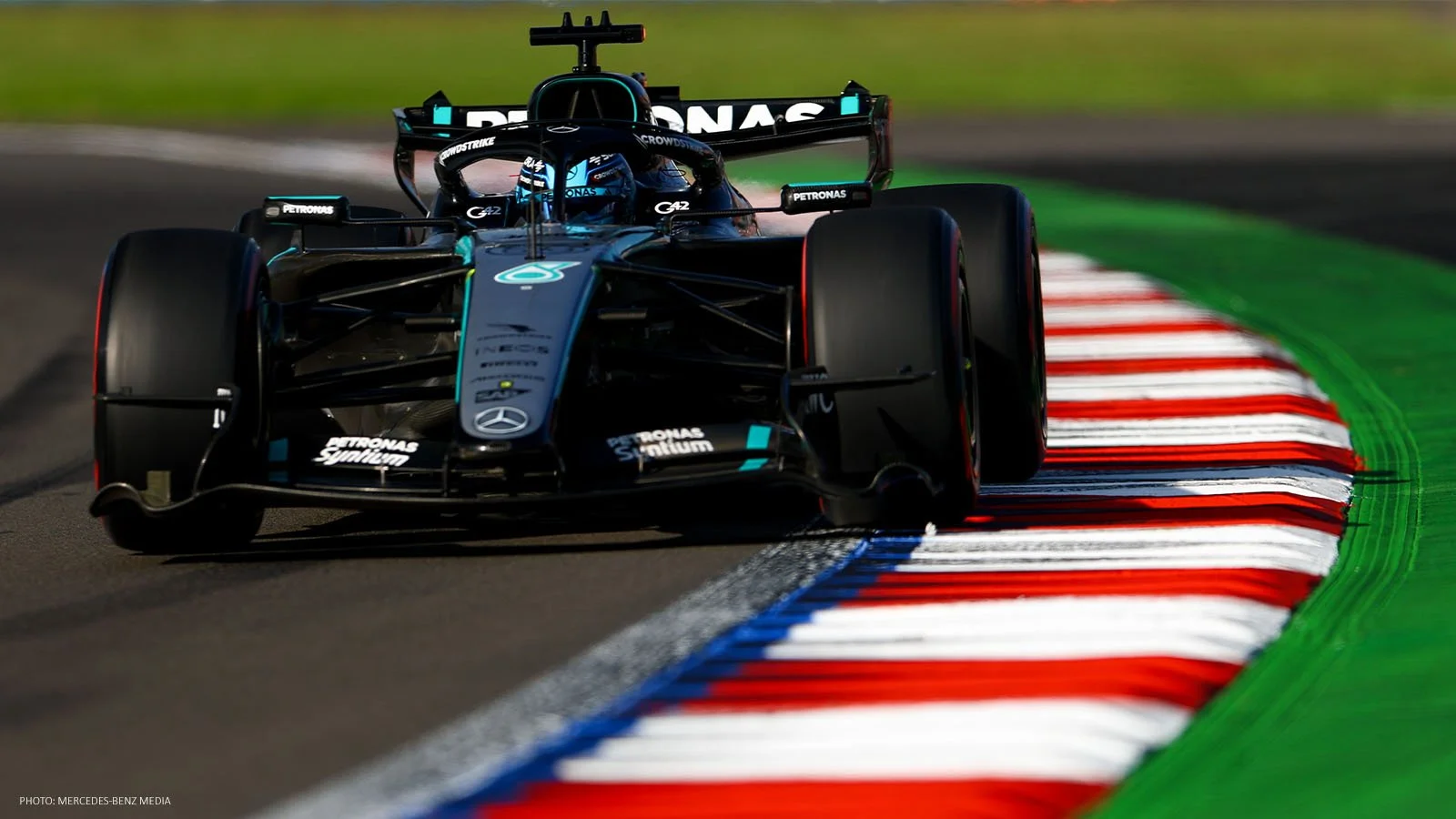
Sunday brought a different problem.
Russell reported a good launch from the front row, followed by an issue with electrical power delivery on the straight. He lost positions before the opening corners had properly sorted the field.
Then came contact with Isack Hadjar, a spin for the Red Bull driver and a 10-second penalty for Russell. The technical setback and the collision were separate blows to a race that had begun with a realistic opportunity at the front.
Toto Wolff accepted Mercedes’ part in the disappointment, saying the team had let Russell down with its energy delivery. That matters when assessing the result: sixth place alone does not explain how his afternoon unfolded.
But fixing the technical issue will only answer part of the wider question. Russell’s own comments make clear that he is also searching for more dependable performance from himself and the car.
A familiar circuit, a different task
In 2022, Russell controlled the Brazilian Grand Prix through Safety Car interruptions and late pressure from Hamilton to lead a Mercedes one-two. It was the team’s first victory of a difficult season and the breakthrough Russell had been waiting for.
That result gives this return a personal connection. It also provides a concrete example of the kind of race he is trying to produce again: competitive from the front, composed under pressure and finished without an opportunity slipping away.
This time, Mercedes arrives with a constructors’ championship still to secure. Russell has explicitly made helping the team win it his priority.
There is room for an individual result within that job. Another victory would add to his season, while a strong weekend alongside Antonelli would help Mercedes finish its championship campaign.
Interlagos cannot change who won the drivers’ title. What it can offer Russell is a fresh measure of his progress: whether the pace that appeared for one crucial lap in Mexico can last through qualifying, the start and an entire Sunday afternoon.
