
Hülkenberg and Bortoleto are tied on 14 points. Haas is just three ahead. With its own engine and liveries I’ve loved, Audi has given me plenty to follow—and reasons to expect a stronger second season.
By Miki | F1Unchained

Seventh place isn’t the ambition that brought Audi into Formula 1. But heading toward the end of its first season, the fight to get there has my attention.
So does the contest inside the garage. Nico Hülkenberg and Gabriel Bortoleto have 14 points each. Either could finish the season ahead, and every point they add could help Audi catch Haas.
I’m impressed by what Audi has taken on this year. That doesn’t mean every result has been impressive, or that eighth in the constructors’ championship deserves an automatic celebration. It means there’s enough here to make me interested in how the team finishes 2026—and more demanding about what comes next.
Granted, Audi inherited Sauber’s people, facilities and decades of Formula 1 experience. That matters when judging its first season. Nevertheless, developing its own power unit while turning that established operation into a factory team is a substantial undertaking.
That’s the context behind my enthusiasm.
Fourteen Points Each, With More Than Bragging Rights at Stake
Hülkenberg brings the experience. Bortoleto is still building his F1 career. Their matching totals give the final stretch a contest worth following even when the cameras are elsewhere.
Equal points don’t tell us they’ve driven equally well at every race. They don’t account for lost running, different starting positions or the chances each driver had. But they do leave a straightforward question: who will finish with more?
For Audi, the useful answer would be both drivers adding to their totals.
Haas leads 31–28 in the fight for seventh. At that margin, one well-executed weekend could change the order. It also makes a single point worth fighting for when a bigger result has slipped away.
As we explained in our November 9 report on Audi’s Brazilian Grand Prix, Hülkenberg recovered the final point after a penalty threatened to leave him empty-handed. Bortoleto finished 16th after a difficult qualifying session.
Brazil showed both sides of this team: enough promise to raise expectations, and enough missed opportunity to leave it wanting more.
Building Its Own Engine Changes the Challenge
The engine is one of the biggest reasons Audi’s first season interests me.
The car is developed in Hinwil, the home of the former Sauber operation. Audi’s power unit comes from its operation in Neuburg, Germany. Making those two sides work together is central to the project.
Having control over both offers opportunities. The chassis and power-unit teams can develop the package around shared requirements. It also puts responsibility for solving problems inside the same wider organization.
That doesn’t make progress quick. Cooling, packaging, reliability and performance all have to work together. Improving one area is only useful if the complete car benefits.
For me, taking that responsibility on deserves recognition. The next test is how much Audi learns from a full season of racing its own package, and how clearly those lessons show up in 2027.
Look Closely at the Car
Audi has also given us something distinctive to look at beneath the paint.
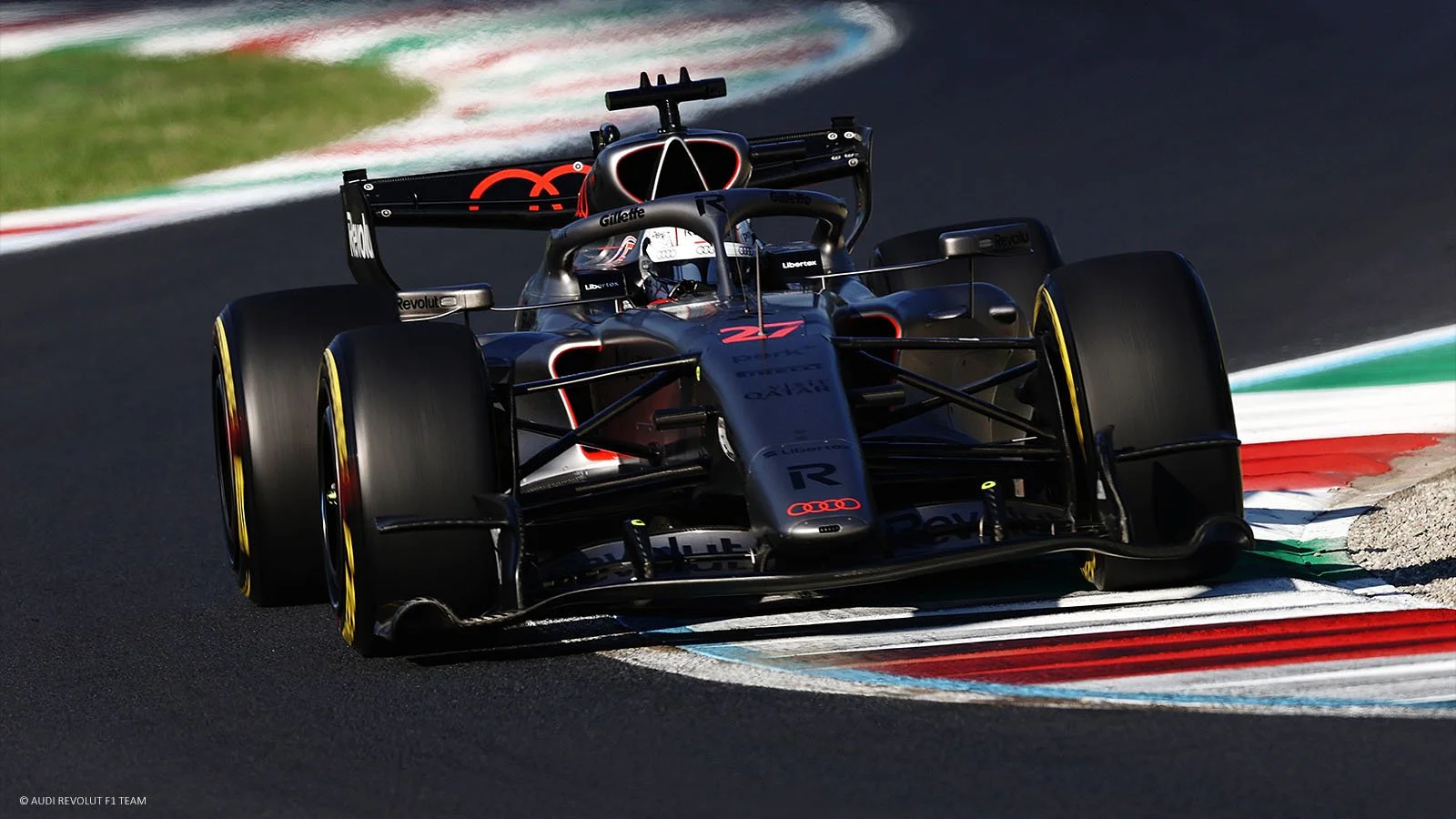
The narrow, upright radiator inlets sit close to the cockpit, with the sidepod bodywork widening farther back. In the front three-quarter photograph below, those openings help explain why the R26 looks different.
When Audi introduced this arrangement during Bahrain testing in February, Formula 1’s technical analysis identified the vertical inlet as unique among that year’s cars at the time.
The thinking involves how air moves around the front wheels, sidepods and floor. Those surfaces have to manage disturbed airflow while also allowing the car to cool properly.
A distinctive design isn’t proof of a faster car. What interests me is seeing Audi pursue its own answer to the regulations, then watching whether development makes that answer more effective.
Binotto’s Job Is to Make the Pieces Work Together
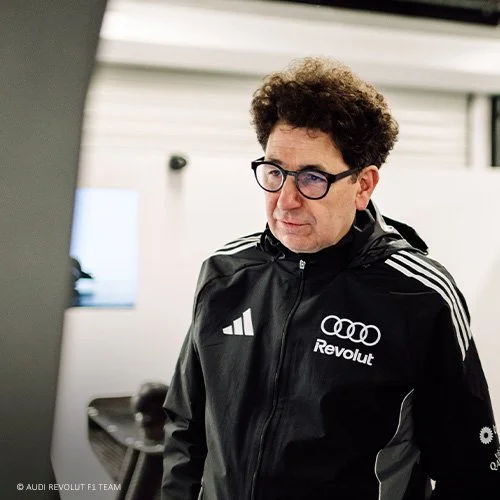
Mattia Binotto’s presence adds another reason to watch.
The former Ferrari team principal now serves as Audi’s CEO and team principal. His experience matters, particularly in a project that has to bring chassis development, engine development and race operations together.
But a familiar name won’t settle the questions on track. His work ultimately has to produce a team that develops effectively and converts its opportunities more consistently.
There are changes behind the scenes, too. In our October 29 report on Thomas Fuhr’s appointment, we explained how the engine company’s new CEO would give technical chief Stefan Dreyer more room to concentrate on development.
That’s the kind of organizational detail that becomes interesting when it leads to a better car. The appointment is a step; the results will tell us its value.
Audi Has Made Its Livery Changes Count
And yes, I’ve loved what Audi has done visually.
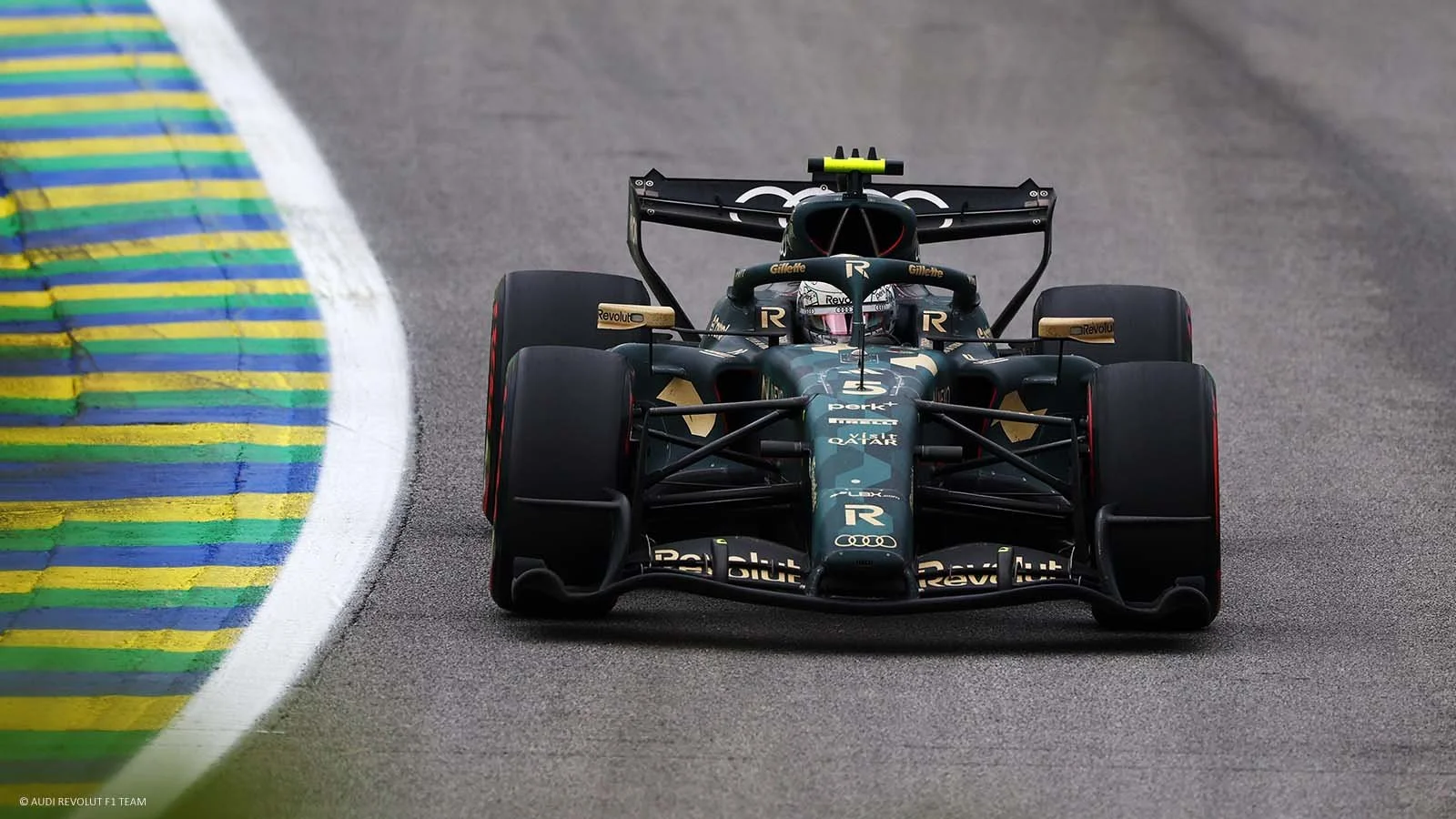
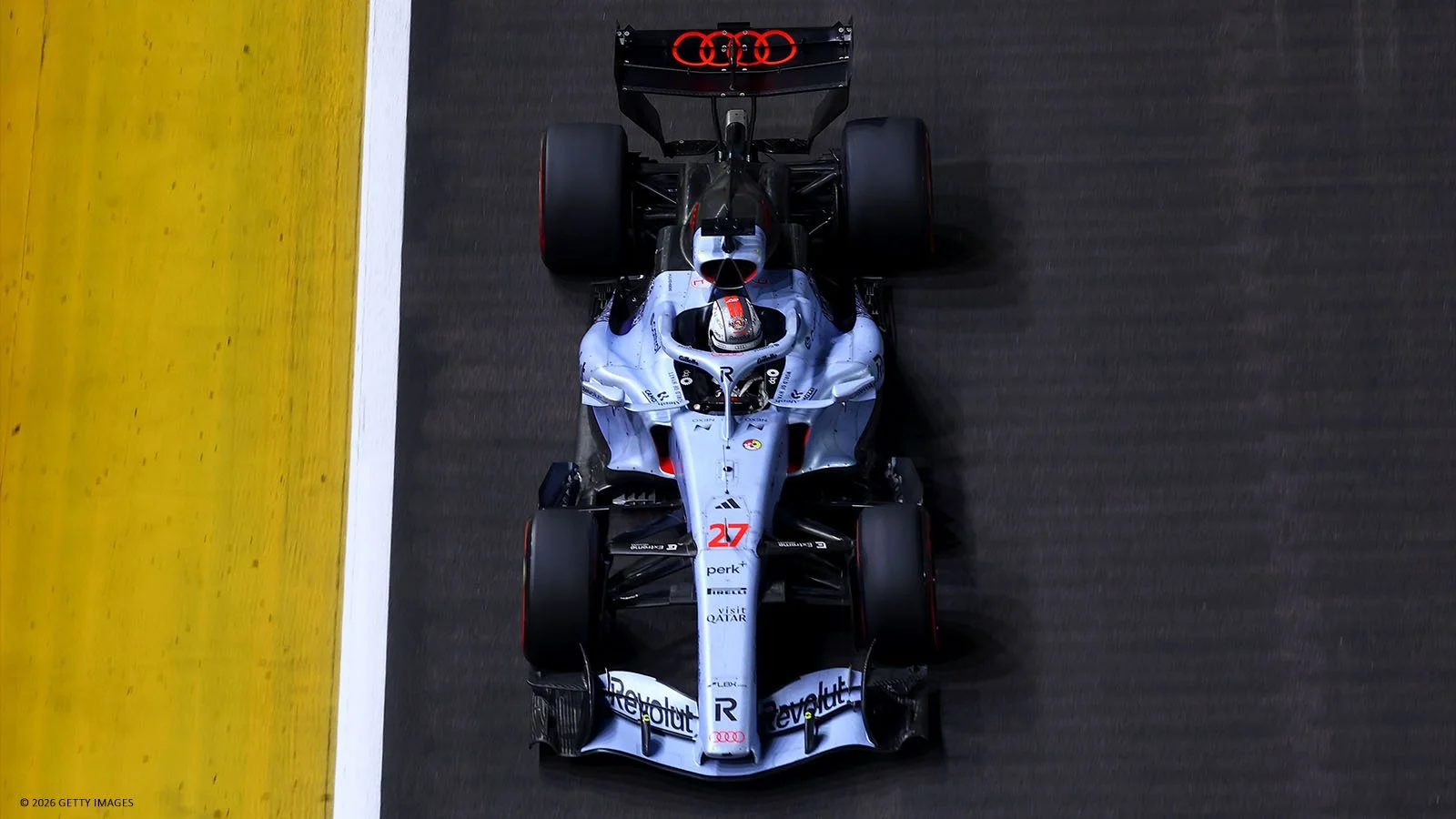
Its special liveries have felt like substantial changes to the car’s identity. The pale Singapore design and the deep green-and-gold Brazil scheme give the R26 very different personalities.
Brazil was a particular favorite of mine. The colors worked, and the design had a connection to the place where it raced.
As we explored in our November 5 story about Audi’s Brazil livery, its geometric pattern drew inspiration from São Paulo’s Piso Paulista sidewalks. It was the team’s third special livery of the season, following Monaco and Singapore.
To my eye, Audi has delivered some of the most dramatic visual changes on the grid this year. That’s a matter of taste, but it’s part of why I’ve enjoyed following the team.
Why I’m Expecting More Next Year
Audi’s history raises my expectations. Thirteen overall Le Mans victories and its 2024 Dakar win belong to very different challenges, but they help explain why this manufacturer arriving in F1 carries weight.
Those achievements won’t earn it a position on the grid. What matters now is whether the organization can turn its first season’s experience into a stronger second one.
I want to see more weekends where both drivers have a realistic chance of scoring. I want promising qualifying performances to become stronger race results. And I want the work on Audi’s own power unit and distinctive chassis to produce progress we can measure.
There’s still something to settle before then. Catching Haas would give this first season a better ending. The Hülkenberg–Bortoleto contest gives us another reason to keep watching.
I’ve enjoyed Audi’s first year, and I’m impressed by the scale of what it’s building. Now I’m looking for the next step: a team that gives both drivers more chances to show what they can do.
— Miki
Who will finish ahead at Audi, Hülkenberg or Bortoleto—and what would you consider a successful second season for the team?
Respectful disagreement is welcome. Personal attacks, abuse and spam will be removed.
